الفروق الدلالية
اضبط مقاييس الفروق الدلالية في Potato لقياس المواقف عبر أزواج من الصفات المتقابلة مع عدد نقاط قابل للضبط.
يعرض مخطط توسيم الفروق الدلالية على الموسِّمين مقاييس من صفات متقابلة لقياس المواقف أو التصورات أو المعاني الإيحائية. لكل مقياس صفتان متضادتان عند طرفيه (مثل «جيد» مقابل «سيئ»)، ويختار الموسِّمون نقطة على المتصل تبيّن أين يقع العنصر.
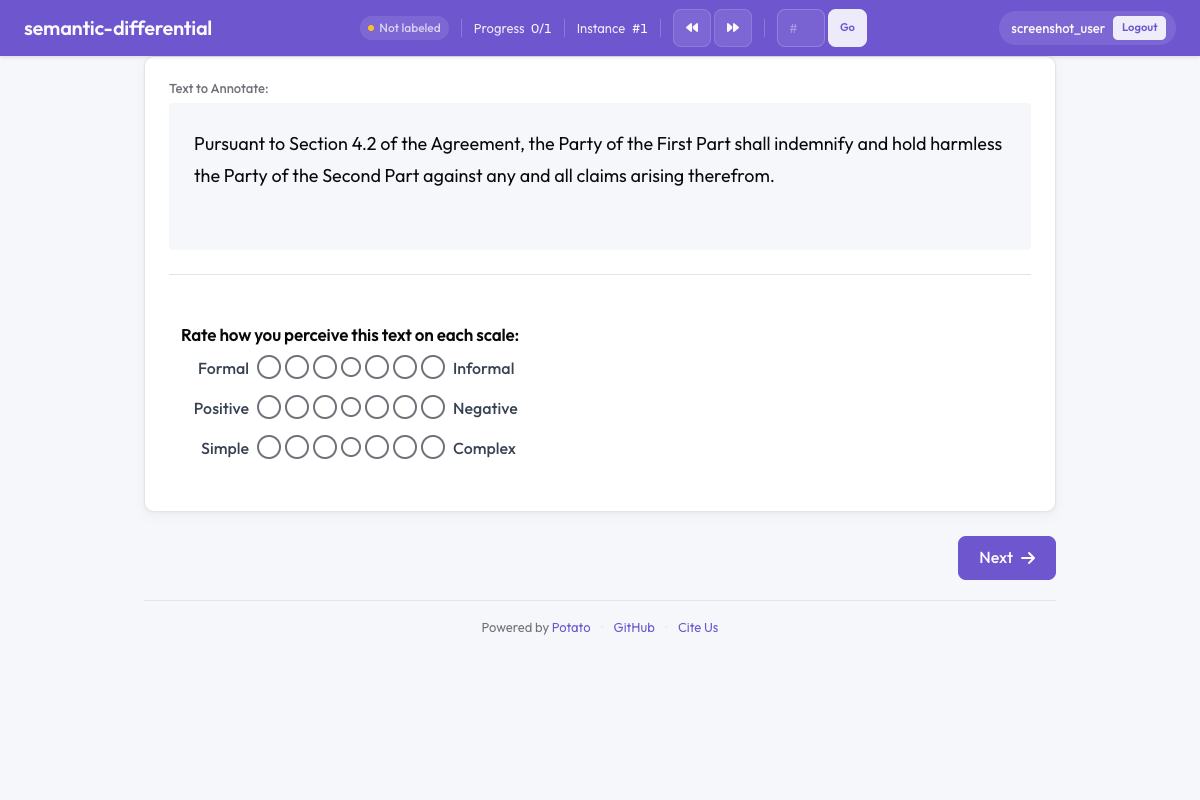 الفروق الدلالية في Potato
نظرة عامة
طوّر تشارلز أوسغود مقاييس الفروق الدلالية في خمسينيات القرن الماضي، وهي منهج راسخ في علم النفس والعلوم الاجتماعية لقياس المعنى الإيحائي للمفاهيم. وفي مهام التوسيم، تفيد في التقاط تصورات دقيقة متعددة الأبعاد يعجز مقياس تقدير واحد عن التعبير عنها.
البدء السريع
annotation_schemes:
  - annotation_type: semantic_differential
    name: text_perception
    description: Rate how you perceive this text on each scale.
    pairs:
      - ["Formal", "Informal"]
      - ["Positive", "Negative"]
      - ["Simple", "Complex"]
    scale_points: 7
خيارات الإعدادات
| الحقل | النوع | الافتراضي | الوصف |
|---|---|---|---|
annotation_type | string | مطلوب | يجب أن يكون "semantic_differential" |
name | string | مطلوب | معرّف فريد لهذا المخطط |
description | string | مطلوب | التعليمات المعروضة للموسِّمين |
pairs | array | مطلوب | قائمة أزواج [left_adjective, right_adjective] |
scale_points | integer | 7 | عدد النقاط على كل مقياس متقابل (5 أو 7 عادةً) |
show_center_label | boolean | true | عرض تسمية «محايد» في منتصف المقياس |
label_requirement.required | boolean | false | هل يجب تقدير كل المقاييس قبل الانتقال |
أمثلة
تقدير أسلوب النص
annotation_schemes:
  - annotation_type: semantic_differential
    name: writing_style
    description: Rate the writing style of this text on each dimension.
    pairs:
      - ["Formal", "Informal"]
      - ["Objective", "Subjective"]
      - ["Concise", "Verbose"]
      - ["Clear", "Ambiguous"]
    scale_points: 7
تصوّر المتحدث
annotation_schemes:
  - annotation_type: semantic_differential
    name: speaker_impression
    description: Rate your impression of the speaker on each dimension.
    pairs:
      - ["Competent", "Incompetent"]
      - ["Warm", "Cold"]
      - ["Trustworthy", "Untrustworthy"]
      - ["Dominant", "Submissive"]
    scale_points: 7
تقييم المنتج
annotation_schemes:
  - annotation_type: semantic_differential
    name: product_perception
    description: How do you perceive this product?
    pairs:
      - ["Innovative", "Traditional"]
      - ["Affordable", "Expensive"]
      - ["Reliable", "Unreliable"]
      - ["Simple", "Complex"]
    scale_points: 5
أبعاد الانفعال (EPA)
إطار التقييم والقوة والنشاط الكلاسيكي:
annotation_schemes:
  - annotation_type: semantic_differential
    name: epa_rating
    description: Rate this concept on each dimension.
    pairs:
      - ["Good", "Bad"]
      - ["Powerful", "Weak"]
      - ["Active", "Passive"]
    scale_points: 7
صيغة المخرجات
{
  "text_perception": {
    "labels": {
      "Formal-Informal": 5,
      "Positive-Negative": 2,
      "Simple-Complex": 4
    }
  }
}
تتراوح القيم من 1 (الصفة اليسرى) إلى scale_points (الصفة اليمنى)، وتمثّل النقطة الوسطى الحياد.
أفضل الممارسات
- استخدم مقاييس من 7 نقاط افتراضياً - هي المعيار في أبحاث الفروق الدلالية وتعطي تدرجاً كافياً
- وازن القطبية بين الأزواج - نوّع الجهة التي تحمل الصفة «الإيجابية» لتفادي أنماط الاستجابة النمطية
- اقصر الأزواج على 5 إلى 8 لكل عنصر - كثرة المقاييس تسبب الإرهاق وتخفض جودة البيانات
- استخدم أزواج صفات معتمدة - أعد استعمال الأزواج المتحقق منها في الأبحاث القائمة متى توافرت
- أبقِ تسمية المنتصف - النقطة الوسطى المحايدة مرجع مهم للموسِّمين
- رتّب الأزواج عشوائياً - نوّع ترتيب العرض إن أمكن لتقليل أثر التثبيت
قراءة إضافية
- مقاييس ليكرت - مقاييس تقدير ترتيبية للموافقة أو التكرار
- شريط التمرير - توسيم قيمة متصلة
- المقارنة الزوجية - مقارنة عنصرين مباشرةً
للاطلاع على تفاصيل التنفيذ، راجع الوثائق المصدرية.