توسيم الثقة
أضف تقديرات الثقة مقترنة بتوسيمات أخرى في Potato باستخدام مقاييس ليكرت أو أشرطة التمرير لقياس مدى يقين الموسِّم.
يتيح مخطط توسيم الثقة للموسِّمين تقدير ثقتهم في توسيم آخر أجروه. فهو يقرن مقياس ثقة (ليكرت أو شريط تمرير) بمخطط توسيم مستهدَف، ما يمكّن الباحثين من قياس ما اختاره الموسِّمون ومدى يقينهم من اختيارهم معاً.
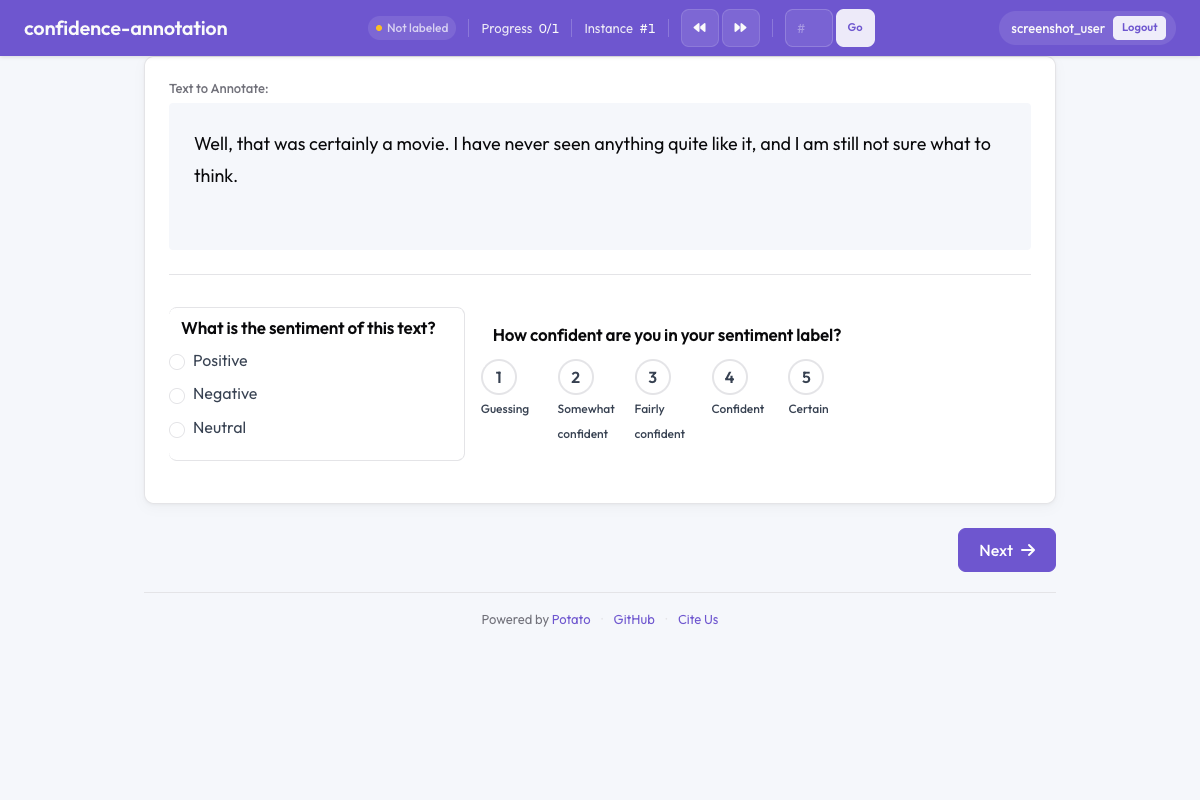 توسيم الثقة في Potato
نظرة عامة
توسيمات الثقة أساسية لدراسة جودة التوسيم، وتحديد العناصر الملتبسة، وترجيح التسميات عند التجميع. وعند تهيئتها، تظهر أداة تقدير الثقة إلى جانب التوسيم المستهدَف، فتطلب من الموسِّمين بيان مدى تأكدهم من قرارهم.
البدء السريع
annotation_schemes:
  - annotation_type: radio
    name: sentiment
    description: What is the sentiment of this text?
    labels: ["Positive", "Negative", "Neutral"]

  - annotation_type: confidence
    name: sentiment_confidence
    description: How confident are you in your sentiment label?
    target_schema: sentiment
    scale_type: likert
    scale_points: 5
خيارات الإعدادات
| الحقل | النوع | الافتراضي | الوصف |
|---|---|---|---|
annotation_type | string | مطلوب | يجب أن يكون "confidence" |
name | string | مطلوب | معرّف فريد لهذا المخطط |
description | string | مطلوب | التعليمات المعروضة للموسِّمين |
target_schema | string | اختياري | اسم مخطط التوسيم الذي ينطبق عليه تقدير الثقة |
scale_type | string | "likert" | نوع المقياس: "likert" لنقاط منفصلة أو "slider" لمقياس متصل |
scale_points | integer | 5 | عدد النقاط على مقياس ليكرت (يُهمَل مع شريط التمرير) |
labels | array | اختياري | تسميات مخصصة لنقاط المقياس (مثل ["Not confident", "Very confident"]) |
slider_min | integer | — | القيمة الدنيا لشريط التمرير (تُستخدم فقط حين تكون scale_type بقيمة "slider") |
slider_max | integer | — | القيمة العليا لشريط التمرير (تُستخدم فقط حين تكون scale_type بقيمة "slider") |
label_requirement.required | boolean | false | هل يجب إتمام تقدير الثقة قبل الانتقال |
أمثلة
مقياس ثقة بليكرت
annotation_schemes:
  - annotation_type: radio
    name: toxicity
    description: Is this comment toxic?
    labels: ["Toxic", "Not Toxic"]

  - annotation_type: confidence
    name: toxicity_confidence
    description: How confident are you in your toxicity judgment?
    target_schema: toxicity
    scale_type: likert
    scale_points: 5
    labels: ["Not at all confident", "Slightly confident", "Moderately confident", "Very confident", "Extremely confident"]
مقياس ثقة بشريط تمرير
annotation_schemes:
  - annotation_type: radio
    name: stance
    description: What stance does the author take?
    labels: ["Support", "Oppose", "Neutral"]

  - annotation_type: confidence
    name: stance_confidence
    description: Rate your confidence from 0 (guessing) to 100 (certain).
    target_schema: stance
    scale_type: slider
تقدير ثقة إلزامي
annotation_schemes:
  - annotation_type: multiselect
    name: topics
    description: Select all topics that apply.
    labels: ["Politics", "Economy", "Health", "Education"]

  - annotation_type: confidence
    name: topics_confidence
    description: How confident are you in your topic selections?
    target_schema: topics
    scale_type: likert
    scale_points: 3
    labels: ["Low", "Medium", "High"]
ثقة مستقلة (بلا هدف)
يمكن استخدام توسيمات الثقة كذلك من دون مخطط مستهدَف لأغراض التقييم الذاتي العام:
annotation_schemes:
  - annotation_type: confidence
    name: task_familiarity
    description: How familiar are you with this topic area?
    scale_type: likert
    scale_points: 5
    labels: ["Not familiar", "Slightly familiar", "Somewhat familiar", "Very familiar", "Expert"]
صيغة المخرجات
{
  "toxicity_confidence": {
    "labels": {
      "confidence": 4
    }
  }
}
في مقاييس ليكرت، تتراوح القيم من 1 إلى scale_points. وفي أشرطة التمرير، تتراوح من slider_min إلى slider_max.
أفضل الممارسات
- اقرنه دائماً بمخطط مستهدَف - تقديرات الثقة تكون أنفع حين ترتبط بقرار توسيم بعينه
- استخدم ليكرت للبساطة - المقاييس المنفصلة أسرع وأسهل على الموسِّمين
- استخدم أشرطة التمرير للقياس الدقيق - حين تحتاج إلى قيم ثقة دقيقة للتحليل اللاحق
- اجعل الثقة إلزامية - تقديرات الثقة الاختيارية كثيراً ما تُتخطى، فتقل فائدة البيانات
- حلّل أنماط الثقة - العناصر منخفضة الثقة مرشحة جيدة للتحكيم أو لتوسيمات إضافية
قراءة إضافية
- مقاييس ليكرت - مقاييس تقدير ترتيبية
- شريط التمرير - توسيم قيمة متصلة
- مراقبة الجودة - فحوصات الانتباه والمعايير الذهبية
للاطلاع على تفاصيل التنفيذ، راجع الوثائق المصدرية.