تقييم الرُبريك
أنشئ شبكات تقييم متعددة المعايير في Potato لتقدير مخرجات النماذج اللغوية، وتصحيح المقالات، وجودة الترجمة، وأي مهمة توسيم قائمة على رُبريك منظّم.
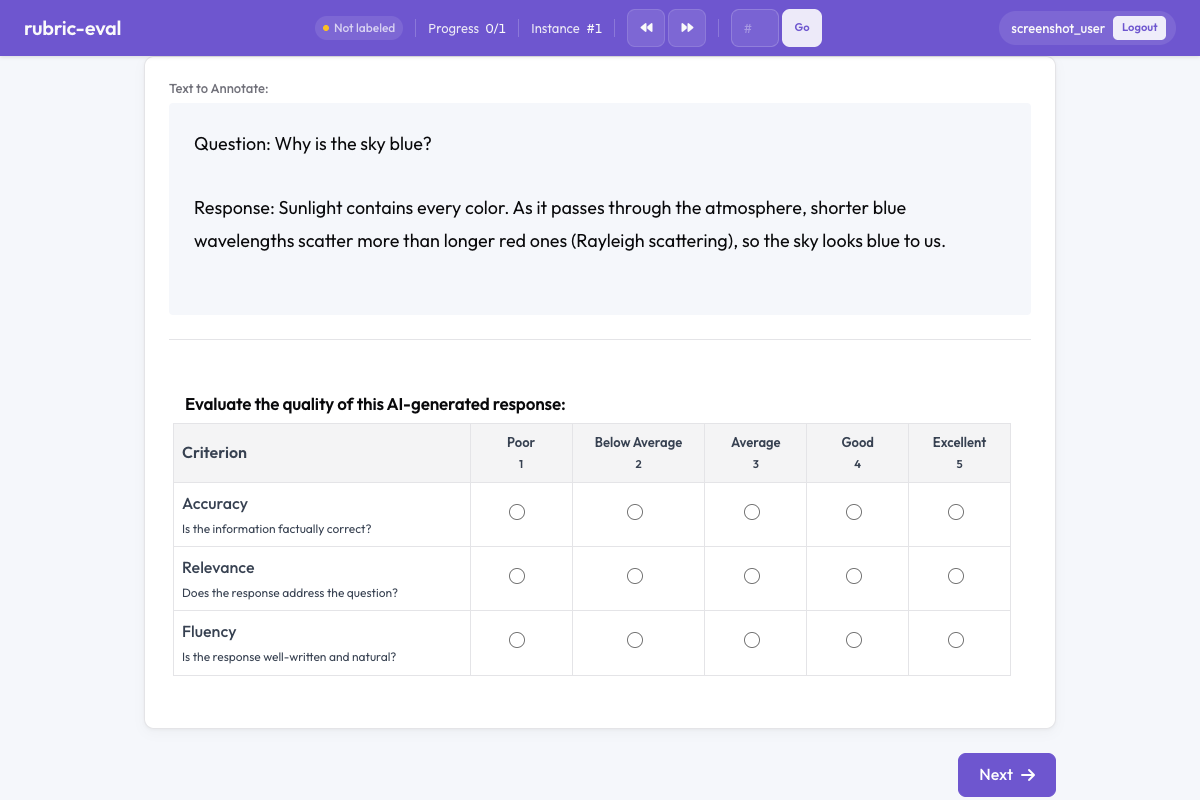
يوفر مخطط توسيم تقييم الرُبريك واجهة شبكية منظّمة لتقدير المحتوى وفق معايير متعددة على مقياس محدد. استخدمه في تقييم مخرجات النماذج اللغوية، وتصحيح المقالات، وتقدير جودة الترجمة، أو أي مهمة تحتاج إلى تقدير منظّم متعدد الأبعاد.
 تقييم الرُبريك في Potato
نظرة عامة
يعرض مخطط تقييم الرُبريك:
- شبكة معايير لكل معيار فيها مقياس تقدير خاص به
- تسميات المقياس تتدرج من ضعيف إلى ممتاز (قابلة للتخصيص)
- درجة إجمالية اختيارية تلخّص المعايير كلها
- أوصاف لكل معيار توجّه الموسِّمين
وهذا مفيد على وجه الخصوص في التقييم البشري المنظّم لمخرجات الذكاء الاصطناعي التوليدي.
البدء السريع
yaml
annotation_schemes:
  - annotation_type: rubric_eval
    name: response_quality
    description: Evaluate the quality of this AI-generated response.
    scale_points: 5
    criteria:
      - name: Accuracy
        description: Is the information factually correct?
      - name: Relevance
        description: Does the response address the question?
      - name: Fluency
        description: Is the response well-written and natural?
خيارات الإعدادات
| الحقل | النوع | الافتراضي | الوصف |
|---|---|---|---|
annotation_type | string | مطلوب | يجب أن يكون "rubric_eval" |
name | string | مطلوب | معرّف فريد لهذا المخطط |
description | string | مطلوب | التعليمات المعروضة للموسِّمين |
scale_points | integer | 5 | عدد النقاط على مقياس التقدير |
scale_labels | array | ["Poor", "Fair", "Average", "Good", "Excellent"] | تسميات كل نقطة على المقياس (يجب أن يطابق طولها scale_points) |
criteria | array | مطلوب | قائمة كائنات المعايير، لكل منها name وdescription اختياري |
show_overall | boolean | false | إظهار صف درجة إجمالية إضافي أسفل المعايير |
أمثلة
تقييم مخرجات النماذج اللغوية
yaml
annotation_schemes:
  - annotation_type: rubric_eval
    name: llm_eval
    description: Rate the quality of this model-generated response.
    scale_points: 5
    scale_labels:
      - Poor
      - Fair
      - Average
      - Good
      - Excellent
    show_overall: true
    criteria:
      - name: Helpfulness
        description: Does the response provide useful and actionable information?
      - name: Accuracy
        description: Is the response factually correct and free of hallucinations?
      - name: Harmlessness
        description: Is the response free of harmful, biased, or inappropriate content?
      - name: Coherence
        description: Is the response logically structured and easy to follow?
تصحيح المقالات
yaml
annotation_schemes:
  - annotation_type: rubric_eval
    name: essay_grade
    description: Grade this student essay using the rubric below.
    scale_points: 4
    scale_labels:
      - Below Expectations
      - Approaching
      - Meets Expectations
      - Exceeds Expectations
    criteria:
      - name: Thesis
        description: Is there a clear and arguable thesis statement?
      - name: Evidence
        description: Does the essay use relevant evidence to support claims?
      - name: Organization
        description: Is the essay logically organized with clear transitions?
      - name: Grammar
        description: Is the writing free of grammatical and spelling errors?
تقدير جودة الترجمة
yaml
annotation_schemes:
  - annotation_type: rubric_eval
    name: translation_quality
    description: Evaluate the quality of this machine translation.
    scale_points: 3
    scale_labels:
      - Unacceptable
      - Acceptable
      - Perfect
    criteria:
      - name: Adequacy
        description: Does the translation convey the same meaning as the source?
      - name: Fluency
        description: Does the translation read naturally in the target language?
      - name: Terminology
        description: Are domain-specific terms translated correctly?
صيغة المخرجات
json
{
  "response_quality": {
    "labels": {
      "Accuracy": 4,
      "Relevance": 5,
      "Fluency": 3
    },
    "overall": 4
  }
}
يقابل كل معيار قيمة المقياس المختارة (بترقيم يبدأ من 1). ولا يظهر حقل overall إلا حين تكون show_overall بقيمة true.
أفضل الممارسات
- أبقِ المعايير مستقلة - ينبغي أن يقيس كل معيار بعداً مختلفاً تفادياً للتقدير المكرر
- اكتب أوصافاً واضحة - ينبغي أن يعرف الموسِّمون بالضبط ما الذي يقيسه كل معيار دون التباس
- استخدم من 3 إلى 5 نقاط على المقياس - النقاط الأقل تخفف العبء الذهني، وما تجاوز 7 نقاط نادراً ما يحسّن الموثوقية
- وفّر أمثلة مرجعية - اذكر في الوصف ما الذي يمثّل كل طرف من طرفي المقياس
- فعّل الدرجة الإجمالية للتجميع -
show_overallمفيد حين تحتاج إلى مقياس ملخّص واحد إلى جانب التفاصيل
قراءة إضافية
- مقاييس ليكرت - مقاييس تقدير أحادية البعد
- المقارنة الزوجية - التقييم جنباً إلى جنب
- مراقبة الجودة - فحوصات الانتباه والمعايير الذهبية
للاطلاع على تفاصيل التنفيذ، راجع الوثائق المصدرية.