多智慧體團隊評估
按團隊結構而非扁平的對話記錄來標註多智慧體系統。Potato 提供可點選的智慧體互動圖、跨智慧體失敗歸因、交接審查、單智慧體與整隊評分卡、工具爭用時間線,以及湧現行為標記。
多智慧體系統的失敗方式與單個智慧體不同:故障發生在智慧體之間、在某次交接處,或源於團隊的組織方式。評估它意味著把結果歸因到是哪個智慧體、哪一步、哪次交接,而不只是給一段扁平的對話記錄打分。 Potato 為此提供了一組專門構建的標註介面:可點選的互動圖、失敗歸因、交接審查、單智慧體與整隊評分卡、工具爭用時間線,以及跨泳道的湧現行為標記。
這些都建立在智慧體軌跡檢視與 MAST 失敗分類體系之上。每個 schema 在渲染時都從軌跡本身推匯出其中的智慧體、步驟與交接,因此標註者只能從執行中實際發生的內容中進行選擇。
互動圖(agent_interaction_graph)
整次執行渲染為一張有向圖:節點是智慧體,邊是它們之間的訊息與交接轉移(邊越粗表示越頻繁),佈局根據軌跡自動生成。標註者點選節點以標記關鍵路徑,點選邊以在 正常 → 關鍵 → 有問題 之間迴圈切換。對於"我如何看清一次多智慧體執行的結構"這個問題,這是最清晰的答案,也是通用標註工具不提供的一種介面。
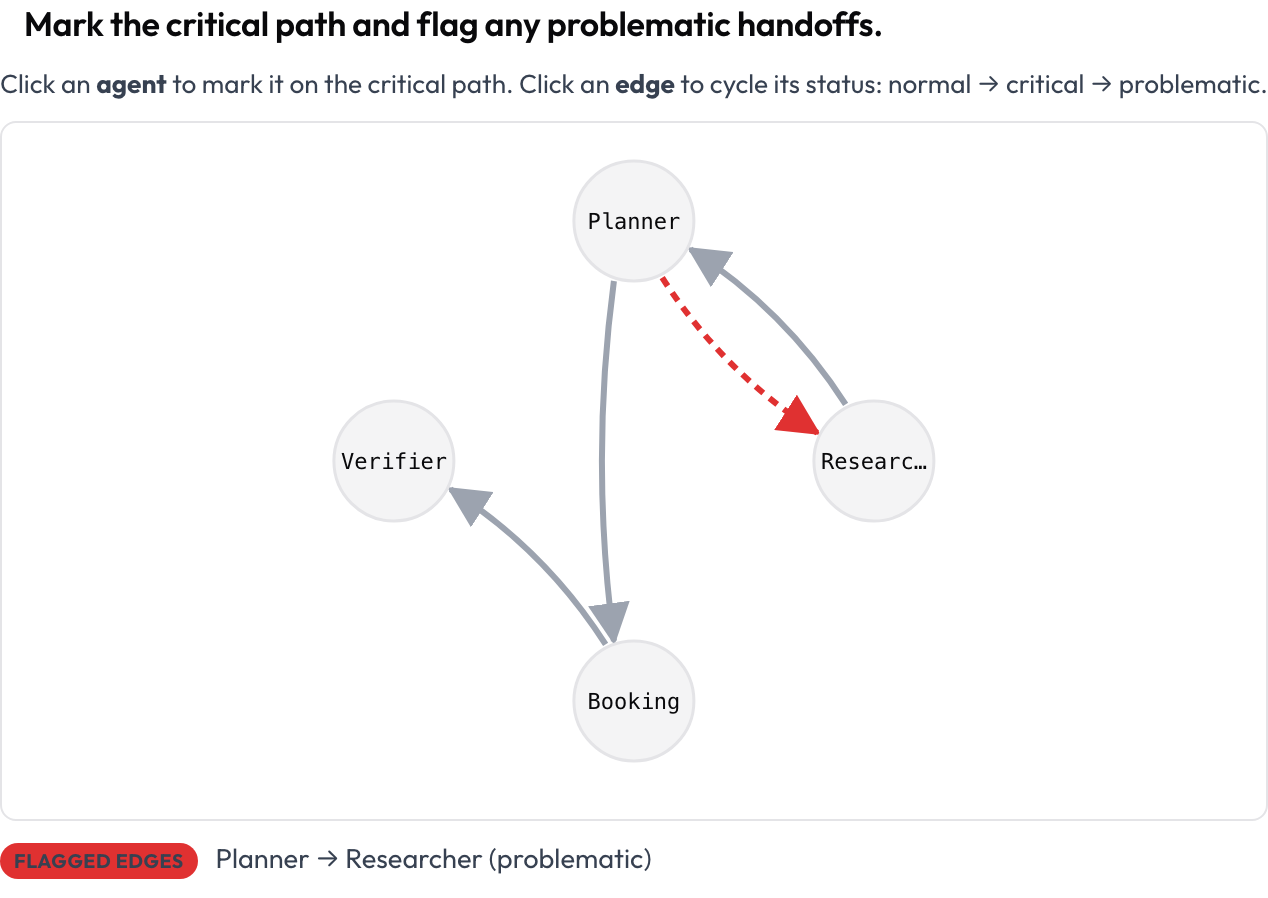 Mark the critical path and flag problematic handoffs on a clickable agent-interaction graph
annotation_schemes:
  - annotation_type: agent_interaction_graph
    name: graph
    description: "Mark the critical path and flag any problematic handoffs."
    steps_key: steps
    agent_key: agent
儲存為 {"critical_nodes": [...], "edges": {"A->B": "problematic", ...}}。每個節點和邊都可通過鍵盤聚焦,並有一段即時文本摘要列出關鍵節點和被標記的邊,因此含義絕不會僅靠顏色來傳達。
跨智慧體失敗歸因(failure_attribution)
當一個團隊失敗時,有用的標籤是來自失敗歸因文獻的**(責任智慧體、決定性步驟、原因)**三元組(Zhang 等人,Which Agent Causes Task Failures and When?,ICML 2025,Who&When 資料集)。智慧體下拉框和步驟選擇器由軌跡自身的回合填充,因此標註者會把失敗歸因到一個真實的智慧體和一個真實的步驟上。
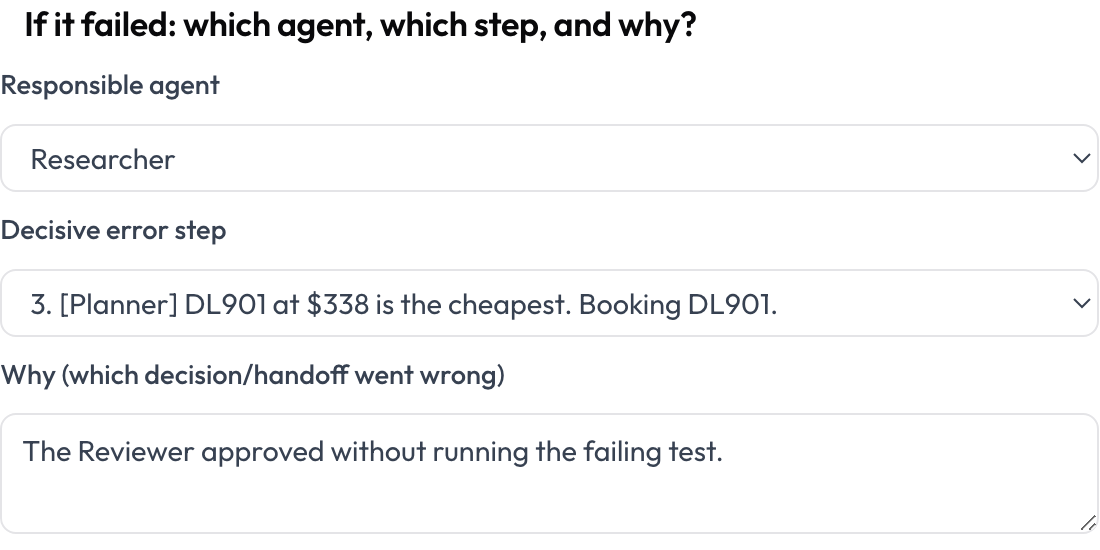 Attribute a multi-agent failure to the responsible agent, the decisive step, and why
annotation_schemes:
  - annotation_type: failure_attribution
    name: attribution
    description: "If it failed: which agent, which step, and why?"
    steps_key: steps
    agent_key: agent
    # agents: [Planner, Coder, Reviewer]   # optional static list instead of deriving from the trace
儲存為 {"responsible_agent", "decisive_step", "reason"}。將它與一個 radio 結果 schema(成功/失敗)搭配使用,使歸因只在失敗的執行上觸發。
交接審查(handoff_review)
每一次交接,即一個智慧體將控制權傳給另一個智慧體,都成為一個可標註的一等物件。只要行動智慧體在相鄰回合之間發生變化,Potato 就會生成一張交接卡片 A → B;標註者標記智慧體間的失配並評定交接品質。這些失敗模式以 MAST 的智慧體間類別和"回聲"現象為依據(Zhang 等人,2025)。
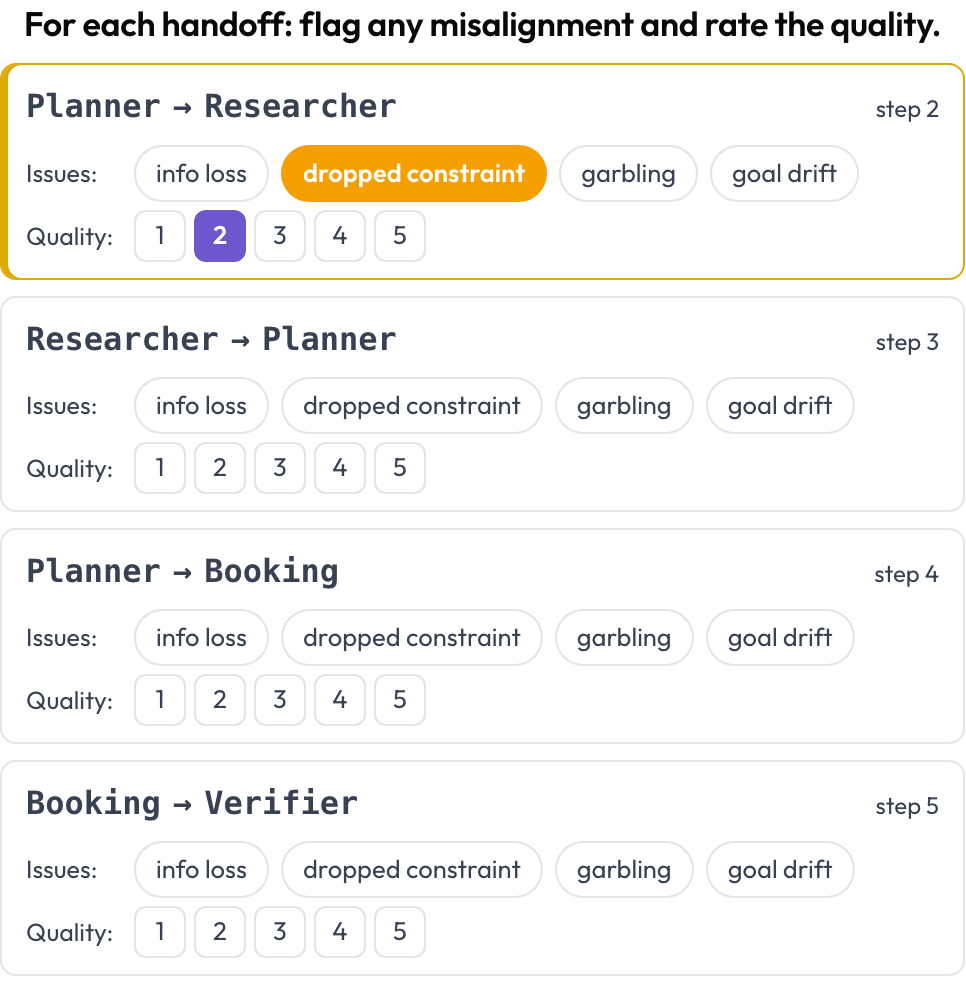 Flag inter-agent misalignment on every handoff and rate its quality
annotation_schemes:
  - annotation_type: handoff_review
    name: handoffs
    description: "For each handoff: flag any misalignment and rate the quality."
    steps_key: steps
    agent_key: agent
    flags: [info_loss, dropped_constraint, garbling, goal_drift]
    quality_scale: 5
交接在渲染時從軌跡中推匯出來,因此無需手動設定。儲存為一個 {index, step, from, to, flags, quality} 列表。
單智慧體與整隊評分卡(agent_scorecard)
在兩個層級上同時為一次執行打分(MultiAgentBench,Zhou 等人,ACL 2025):每個智慧體獲得各維度的分數(角色忠實度、貢獻度、協調性),團隊獲得共享維度的分數,並可選地勾選里程碑。智慧體的行來自軌跡自身的回合,因此該矩陣與實際參與者相匹配。
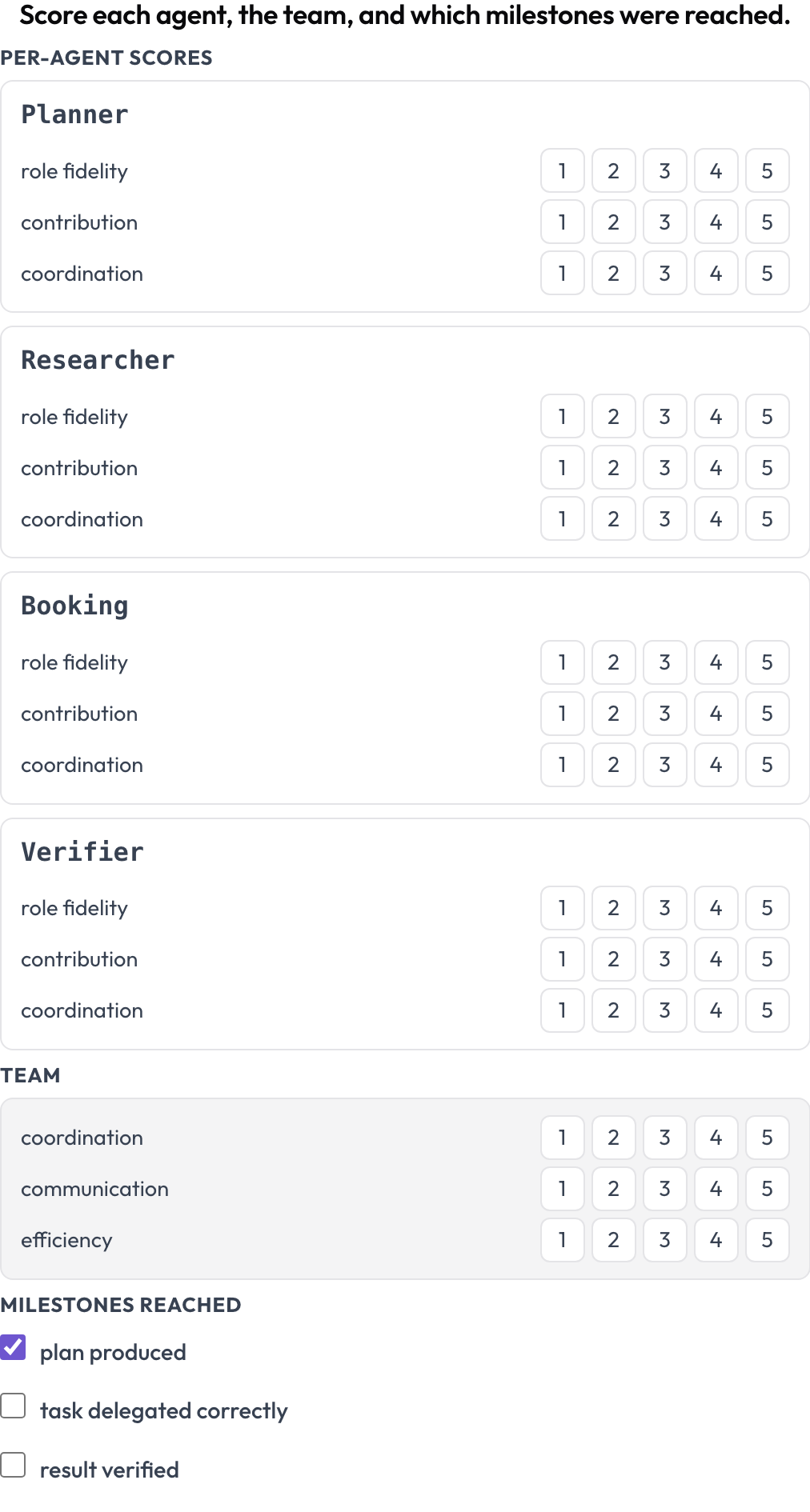 Score every agent on role fidelity, contribution, and coordination, plus the team and milestones
annotation_schemes:
  - annotation_type: agent_scorecard
    name: scorecard
    description: "Score each agent, the team, and which milestones were reached."
    steps_key: steps
    agent_key: agent
    scale: 5
    agent_dimensions: [role fidelity, contribution, coordination]
    team_dimensions: [coordination, communication, efficiency]
    milestones: [plan produced, task delegated correctly, result verified]   # optional
儲存為 {"agents": {name: {dim: score}}, "team": {dim: score}, "milestones": {name: bool}}。
工具/資源爭用時間線(tool_contention)
跨智慧體的併發工具與資源使用會渲染在一條多泳道時間線上,每個智慧體一條泳道。兩次呼叫在重疊時間內觸及同一資源的區域會跨泳道高亮,並列出以供分類:死鎖、迴圈等待、競態條件或良性(DPBench,2026)。這就是你捕捉逐回合對話記錄所隱藏的併發故障的方式。
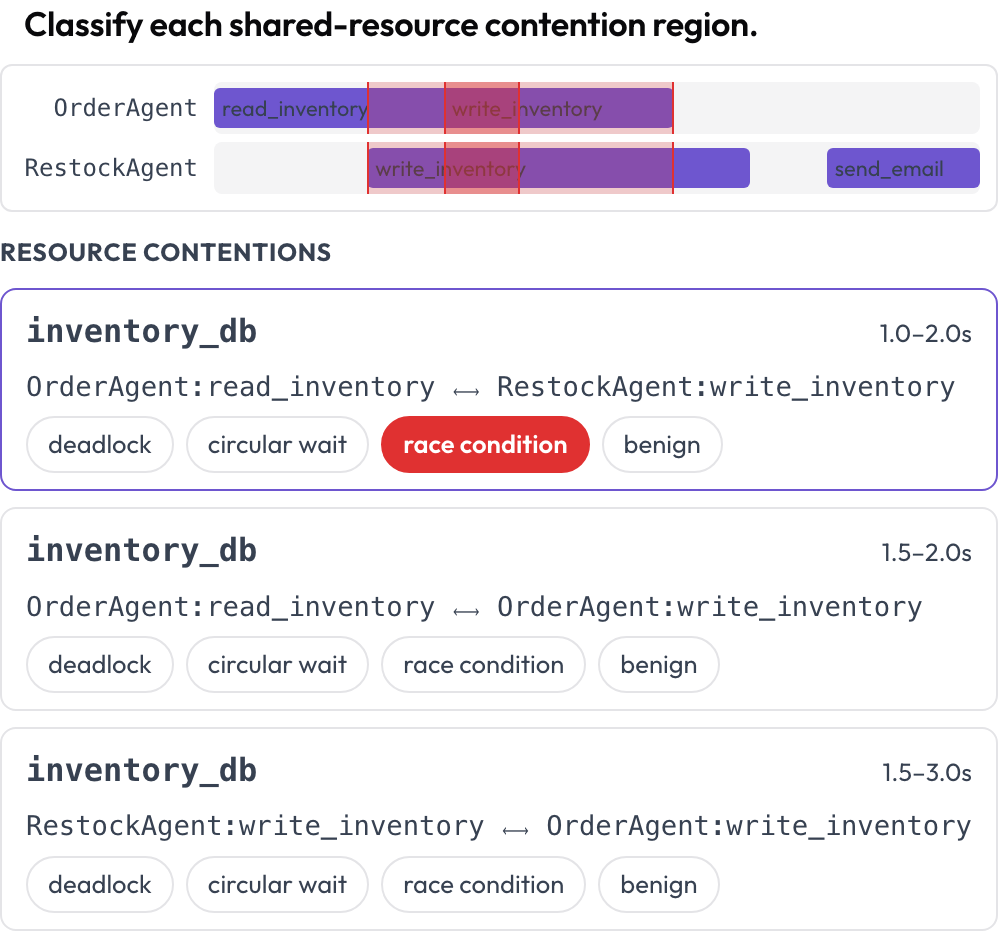 Spot deadlocks and race conditions on a per-agent tool-call timeline
annotation_schemes:
  - annotation_type: tool_contention
    name: contention
    description: "Classify each shared-resource contention region."
    calls_key: calls          # list of {agent, tool, start, end, resource}
    agent_key: agent
    resource_key: resource
    contention_labels: [deadlock, circular_wait, race_condition, benign]
爭用區域在渲染時計算得出(相同的 resource、重疊的區間)。儲存為 {"contentions": {idx: label}}。
跨泳道湧現行為(emergent_behavior)
有些失敗是集體性的:合謀、群體思維、級聯錯誤、角色漂移。一種湧現行為並不是一段連續的文本跨度;它是一個參與回合的集合,可能來自不同的智慧體。對於每一種行為,標註者勾選參與其中的回合並新增備註,即一個以回合集合表達的跨泳道跨度。
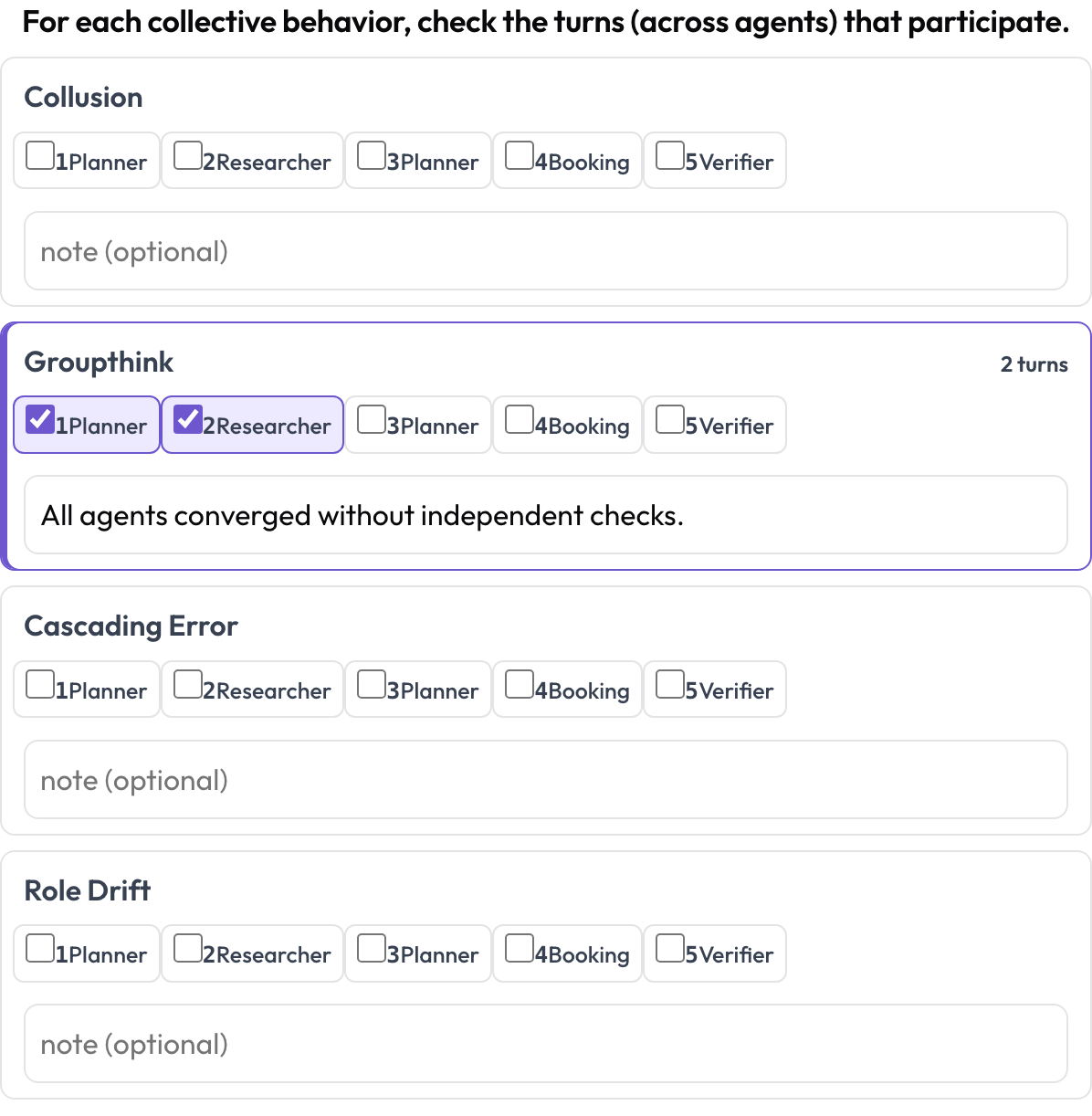 Tag collusion, groupthink, and cascading errors across agents and turns
annotation_schemes:
  - annotation_type: emergent_behavior
    name: emergent
    description: "For each collective behavior, check the turns (across agents) that participate."
    steps_key: steps
    agent_key: agent
    behaviors: [collusion, groupthink, cascading_error, role_drift]
    allow_note: true
儲存為 {behavior: {turns: [idx...], note}},只保留非空的行為。
工具呼叫審查(tool_call_review)
逐一評判每次工具或函式呼叫:是否選對了工具,參數是否正確,順序是否得當(對標 BFCL v4 / MCPMark)?工具呼叫在渲染時從軌跡步驟中提取;每一步的 tool_calls、tool_call 或 action 都會成為一張帶工具名稱和美化列印參數的卡片。
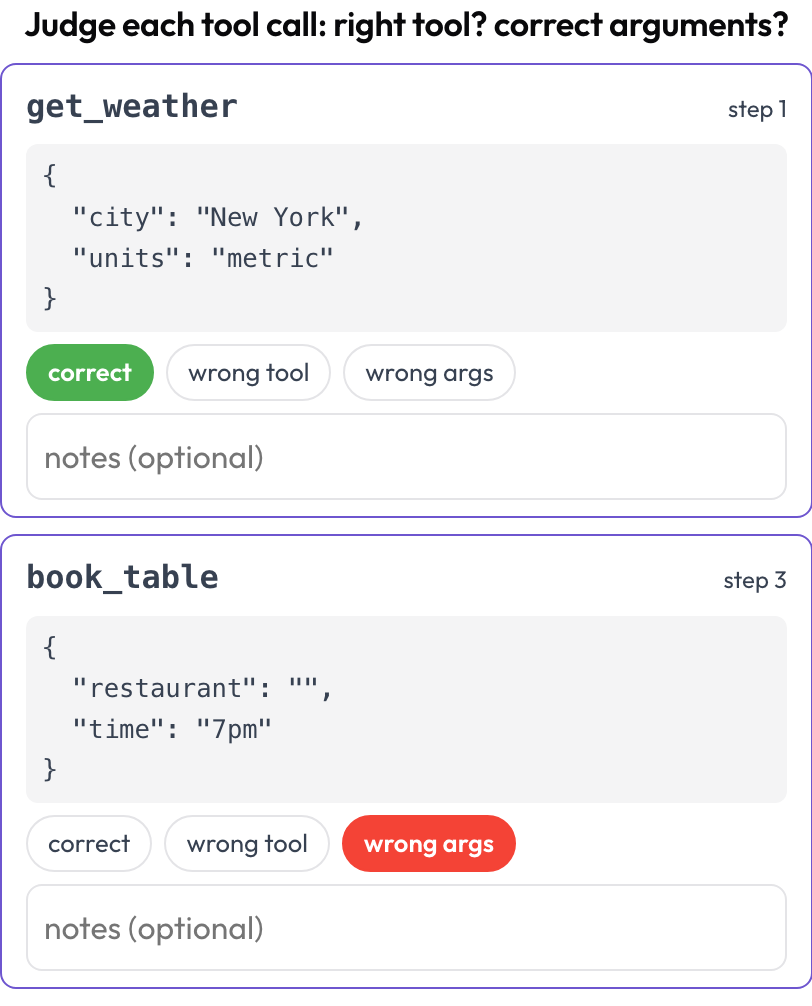 Judge every tool call: right tool, correct arguments, right order
annotation_schemes:
  - annotation_type: tool_call_review
    name: tool_review
    description: "Judge each tool call: right tool? correct arguments?"
    steps_key: steps
    # verdict_options: [correct, wrong_tool, wrong_args, wrong_order]   # customizable
儲存為一個 {index, step, tool, verdict, notes} 列表。
步驟粒度的 MAST 標記
你無需新的 schema,就能把 14 種模式的 MAST 失敗分類體系(Cemri 等人,Why Do Multi-Agent LLM Systems Fail?,2025)繫結到失敗發生的確切步驟(因而也繫結到行動智慧體)。把現有的逐步 trajectory_eval schema 配置為以 MAST 模式作為它的 error_types,並按三個 MAST 類別分組。將它與 failure_attribution 和 handoff_review 搭配以實現完整覆蓋。
annotation_schemes:
  - annotation_type: trajectory_eval
    name: mast_steps
    description: "Tag each step with the MAST failure mode(s) it exhibits."
    steps_key: steps
    step_text_key: content
    error_types:
      - name: "Specification & System Design"
        subtypes: ["Disobey task specification", "Disobey role specification", "Step repetition", "Loss of conversation history", "Unaware of termination conditions"]
      - name: "Inter-Agent Misalignment"
        subtypes: ["Conversation reset", "Fail to ask for clarification", "Task derailment", "Information withholding", "Ignored other agent's input", "Reasoning-action mismatch"]
      - name: "Task Verification & Termination"
        subtypes: ["Premature termination", "No or incomplete verification", "Incorrect verification"]
選擇編排視角
編排架構往往主導一次執行的結果,因此值得將其作為一等標籤來捕獲。無需新的 schema:一個 radio 確認或糾正該執行的模式,進而引導評估視角以及軌跡的佈局方式(順序型 → 泳道,層級型 → 樹,群聊型 → 看板)。
annotation_schemes:
  - annotation_type: radio
    name: orchestration_pattern
    description: "Which orchestration pattern does this run actually follow?"
    labels: [single_agent, sequential_pipeline, hierarchical_manager, group_chat, blackboard, debate, hub_and_spoke]
    has_free_response: true
相關內容
- 多模態智慧體評估 — GUI、語音、影片與文件智慧體 schema
- 標註智慧體軌跡 — 逐步錯誤標註
- 如何評估 AI 智慧體 — 智慧體評估的各個層級
- 智慧體標註 — 軌跡檢視配置與資料接入
如需實現細節,請參閱源文件。