資料格式
支援的資料格式及如何構建標註資料。
Potato 開箱即用地支援多種資料格式。本指南介紹如何構建您的標註資料。
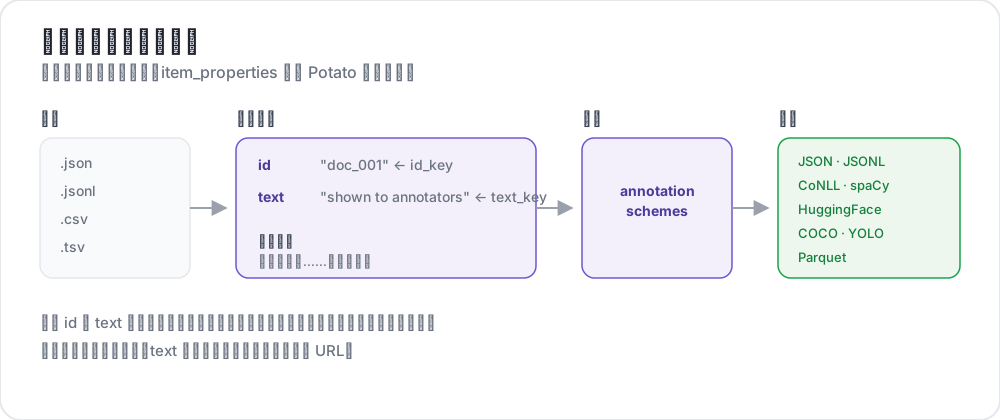 From input file to exported labels
支援的格式
| 格式 | 副檔名 | 描述 |
|---|---|---|
| JSON | .json | 物件陣列 |
| JSON Lines | .jsonl | 每行一個 JSON 物件 |
| CSV | .csv | 逗號分隔值 |
| TSV | .tsv | 製表符分隔值 |
JSON 格式
最常用的格式。您的資料應該是一個物件陣列:
json
[
  {
    "id": "doc_001",
    "text": "This is the first document to annotate.",
    "source": "twitter",
    "date": "2024-01-15"
  },
  {
    "id": "doc_002",
    "text": "This is the second document.",
    "source": "reddit",
    "date": "2024-01-16"
  }
]
JSON Lines 格式
每行是一個單獨的 JSON 物件。適用於大型資料集:
jsonl
{"id": "doc_001", "text": "First document"}
{"id": "doc_002", "text": "Second document"}
{"id": "doc_003", "text": "Third document"}
CSV/TSV 格式
帶標題的表格資料:
csv
id,text,source
doc_001,"This is the first document",twitter
doc_002,"This is the second document",reddit
配置
基本設定
在 YAML 中配置資料檔案和欄位對映:
yaml
data_files:
  - "data/documents.json"

item_properties:
  id_key: id      # Field name for unique ID
  text_key: text  # Field name for content to annotate
多資料檔案
組合多個數據源:
yaml
data_files:
  - "data/batch_1.json"
  - "data/batch_2.json"
  - "data/batch_3.jsonl"
檔案按順序處理併合並。
資料類型
純文本
簡單的文本內容:
json
{
  "id": "1",
  "text": "The product arrived quickly and works great!"
}
媒體檔案
引用影像、影片或音訊:
json
{
  "id": "1",
  "image_path": "images/photo_001.jpg"
}
yaml
item_properties:
  id_key: id
  image_key: image_path
對話/列表
列表會自動以水平方式顯示:
json
{
  "id": "1",
  "text": "Option A,Option B,Option C"
}
文本對
用於比較任務:
json
{
  "id": "pair_001",
  "text": {
    "A": "Response from Model A",
    "B": "Response from Model B"
  }
}
HTML 檔案
引用儲存在資料夾中的 HTML 檔案:
json
{
  "id": "1",
  "html_file": "html/document_001.html"
}
上下文標註
在主文本旁包含上下文:
json
{
  "id": "1",
  "text": "This is great!",
  "context": "Previous message: How do you like the new feature?"
}
yaml
item_properties:
  id_key: id
  text_key: text
  context_key: context
顯示配置
列表顯示選項
控制列表和字典的顯示方式:
yaml
list_as_text:
  # Add prefixes to items
  text_prefix: "A"  # A., B., C. (or "1" for 1., 2., 3.)

  # Display orientation
  horizontal: true  # Side-by-side (false for vertical)

  # Randomization
  randomize_values: true   # Shuffle list items
  randomize_keys: true     # Shuffle dictionary keys
HTML 內容
在文本中啟用 HTML 渲染:
yaml
html_content: truejson
{
  "id": "1",
  "text": "<p>This is <strong>formatted</strong> text.</p>"
}
輸出配置
輸出目錄
指定標註儲存位置:
yaml
output_annotation_dir: "output/"輸出格式
選擇輸出格式:
yaml
output_annotation_format: "json" # json, jsonl, csv, or tsv輸出結構
標註包含文件 ID 和回覆:
json
{
  "id": "doc_001",
  "user": "annotator_1",
  "annotations": {
    "sentiment": "Positive",
    "confidence": 4
  },
  "timestamp": "2024-01-15T10:30:00Z"
}
特殊資料類型
最佳-最差縮放
用於排名任務,使用逗號分隔的項目:
json
{
  "id": "1",
  "text": "Item A,Item B,Item C,Item D"
}
自定義參數
包含額外欄位用於顯示或篩選:
json
{
  "id": "1",
  "text": "Document content",
  "category": "news",
  "priority": "high",
  "custom_field": "any value"
}
資料庫後端
對於大型資料集,使用 MySQL:
yaml
database:
  type: mysql
  host: localhost
  database: potato_db
  user: ${DB_USER}
  password: ${DB_PASSWORD}
Potato 在首次啟動時自動建立所需的表。
資料驗證
Potato 在啟動時驗證您的資料:
- 缺少 ID 欄位 - 所有項目都需要唯一識別符號
- 缺少文本欄位 - 項目需要標註內容
- 重複 ID - 所有 ID 必須唯一
- 檔案未找到 - 驗證資料檔案路徑
完整示例
yaml
task_name: "Document Classification"
task_dir: "."
port: 8000

# Data configuration
data_files:
  - "data/documents.json"

item_properties:
  id_key: id
  text_key: text
  context_key: metadata

# Display settings
list_as_text:
  text_prefix: "1"
  horizontal: false

# Output
output_annotation_dir: "output/"
output_annotation_format: "json"

# Annotation scheme
annotation_schemes:
  - annotation_type: radio
    name: category
    description: "Select the document category"
    labels:
      - News
      - Opinion
      - Tutorial
      - Other

allow_all_users: true
最佳實踐
1. 使用有意義的 ID
使跟蹤和除錯更加容易:
json
{"id": "twitter_2024_001", "text": "..."}2. 保持文本簡潔
過長的文本會減慢標註速度。考慮:
- 擷取關鍵部分
- 提供摘要
- 使用滾動容器
3. 包含後設資料
有助於篩選和分析:
json
{
  "id": "1",
  "text": "Content",
  "source": "twitter",
  "date": "2024-01-15",
  "language": "en"
}
4. 載入前進行驗證
離線檢查您的資料:
python
import json

with open('data.json') as f:
    data = json.load(f)

# Check for required fields
for item in data:
    assert 'id' in item, f"Missing id: {item}"
    assert 'text' in item, f"Missing text: {item}"

# Check for duplicates
ids = [item['id'] for item in data]
assert len(ids) == len(set(ids)), "Duplicate IDs found"

print(f"Validated {len(data)} items")
5. 備份原始資料
將原始資料與標註分開儲存,以確保可重複性。
6. 大檔案使用 JSON Lines
比 JSON 陣列更節省記憶體:
bash
# Convert JSON array to JSON Lines
cat data.json | jq -c '.[]' > data.jsonl
延伸閱讀
有關實現細節,請參閱源文件。