眾包標註的品質控制
確保標註項目品質的最佳實踐,包括可以在 Potato 內外實施的實用策略。
品質控制是區分有用標註和噪聲的關鍵。本指南涵蓋了確保眾包和內部標註項目高品質資料的經過驗證的策略。有關底層功能,請參閱品質控制文件。
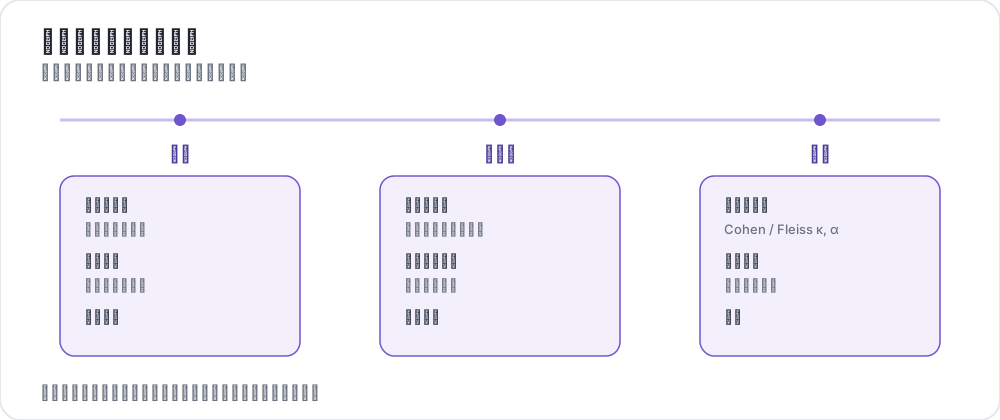 Quality control across the timeline
品質控制概述
有效的品質控制結合多種策略:
- 注意力檢查:驗證標註者是否專注於任務
- 冗餘:對每個項目收集多個標註
- 一致性指標:衡量標註者之間的一致性
- 培訓和指南:確保標註者理解任務
- 人工稽核:抽樣審查標註品質
通過 Surveyflow 進行注意力檢查
Potato 通過 surveyflow 系統支援基本的注意力檢查。您可以在標註批次之間插入調查頁面,要求標註者確認他們正在認真工作。
annotation_task_name: "Sentiment Annotation with Checks"

surveyflow:
  on: true
  order:
    - survey_instructions
    - annotation
    - survey_attention_check
    - annotation
    - survey_completion
將注意力檢查問題定義為調查頁面:
# In your surveyflow survey definitions
survey_attention_check:
  - question: "To confirm you're paying attention, please select 'Strongly Agree'."
    type: radio
    options:
      - Strongly Disagree
      - Disagree
      - Neutral
      - Agree
      - Strongly Agree
請注意,Potato 內建的注意力檢查支援是有限的。對於更復雜的注意力檢查(自動失敗檢測、剔除標註者等),您需要實現後處理指令碼或使用眾包平臺的內建品質功能。
冗餘:每個項目多個標註
對每個項目收集多個標註是最可靠的品質控制方法之一。在資料設定中配置:
annotation_task_name: "Multi-Annotator Sentiment Task"

data_files:
  - path: data.json
    list_as_text: false
    sampling: random

# Control how many annotators see each item through assignment logic
# This is typically managed through your annotator assignment system
使用 Prolific 等眾包平臺時,您可以:
- 多次釋出相同的 HIT 以獲取冗餘標註
- 對相同資料使用不同的工作者批次
- 在資料管道中實現自定義分配邏輯
測量標註者間一致性
一致性由 Potato 替你計算。設定 agreement_metrics: enabled: true,Krippendorff α 會隨著標註的積累出現在管理面板裡。不過下面的程式碼仍然值得了解:當你想要 Potato 不提供的指標,或者在分析已匯出的資料集時會用到。
Cohen's Kappa(兩名標註者)
用於兩名標註者的分類標註:
from sklearn.metrics import cohen_kappa_score

# After collecting annotations
annotator1_labels = ["Positive", "Negative", "Positive", ...]
annotator2_labels = ["Positive", "Negative", "Neutral", ...]

kappa = cohen_kappa_score(annotator1_labels, annotator2_labels)
print(f"Cohen's Kappa: {kappa:.3f}")
Fleiss' Kappa(多名標註者)
用於三名或更多標註者:
from statsmodels.stats.inter_rater import fleiss_kappa
import numpy as np

# Build a matrix of label counts per item
# Each row is an item, each column is a label category
ratings_matrix = np.array([
    [3, 0, 0],  # Item 1: 3 Positive, 0 Negative, 0 Neutral
    [2, 1, 0],  # Item 2: 2 Positive, 1 Negative, 0 Neutral
    [0, 0, 3],  # Item 3: 0 Positive, 0 Negative, 3 Neutral
    ...
])

kappa = fleiss_kappa(ratings_matrix)
print(f"Fleiss' Kappa: {kappa:.3f}")
解釋指南
| Kappa 值 | 解釋 |
|---|---|
| < 0.20 | 一致性差 |
| 0.21 - 0.40 | 一致性一般 |
| 0.41 - 0.60 | 中等一致性 |
| 0.61 - 0.80 | 較高一致性 |
| 0.81 - 1.00 | 近乎完美一致性 |
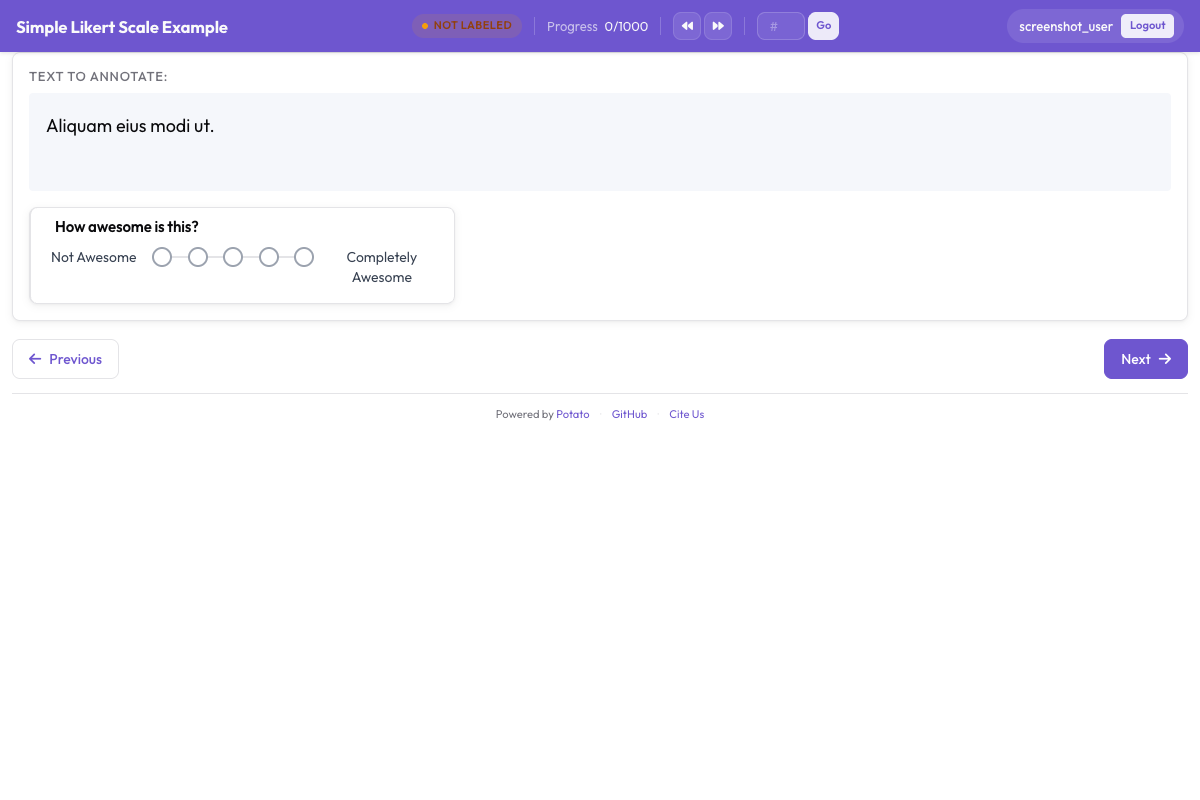
Potato 支援注意力檢查、黃金標準項目和標註者間一致性跟蹤,以維護標註品質:
黃金標準項目
黃金標準項目是具有已知正確答案的預標註項目,混入您的標註資料中。這有助於識別可能在猜測或未認真標註的標註者。
建立黃金項目
- 建立一組具有明確、無歧義正確答案的項目
- 由專家標註這些項目
- 將它們混入您的常規標註資料中
[
  {
    "id": "gold_001",
    "text": "I absolutely love this product! Best purchase ever!",
    "is_gold": true,
    "gold_label": "Positive"
  },
  {
    "id": "gold_002",
    "text": "This is terrible. Complete waste of money. Worst experience.",
    "is_gold": true,
    "gold_label": "Negative"
  },
  {
    "id": "regular_001",
    "text": "The product arrived on time and works as expected.",
    "is_gold": false
  }
]
分析黃金標準表現
收集後,分析每位標註者在黃金項目上的表現:
import json

def calculate_gold_accuracy(annotations_file, gold_labels):
    with open(annotations_file) as f:
        annotations = json.load(f)

    annotator_scores = {}

    for item_id, item_annotations in annotations.items():
        if item_id in gold_labels:
            expected = gold_labels[item_id]
            for annotator, label in item_annotations.items():
                if annotator not in annotator_scores:
                    annotator_scores[annotator] = {'correct': 0, 'total': 0}
                annotator_scores[annotator]['total'] += 1
                if label == expected:
                    annotator_scores[annotator]['correct'] += 1

    for annotator, scores in annotator_scores.items():
        accuracy = scores['correct'] / scores['total']
        print(f"{annotator}: {accuracy:.1%} gold accuracy")

    return annotator_scores
基於時間的品質指標
Potato 在輸出檔案中跟蹤標註計時。使用此資料標記可能的低品質標註:
分析計時資料
import json
from statistics import mean, stdev

def analyze_timing(annotations_file):
    with open(annotations_file) as f:
        data = json.load(f)

    times = []
    for item in data.values():
        if 'time_spent' in item:
            times.append(item['time_spent'])

    avg_time = mean(times)
    std_time = stdev(times)

    # Flag annotations that are too fast (< 2 std below mean)
    threshold = max(avg_time - 2 * std_time, 2)  # At least 2 seconds

    flagged = [t for t in times if t < threshold]
    print(f"Average time: {avg_time:.1f}s")
    print(f"Flagged as too fast: {len(flagged)} items")
平臺級品質控制
使用眾包平臺時,利用其內建的品質功能:
Prolific
- 使用預篩選過濾器(通過率、以往研究)
- 設定最低完成時間要求
- 在預調查中使用注意力檢查問題
- 在批准付款前稽核提交內容
MTurk
- 要求最低 HIT 通過率(>95%)
- 使用資質測試
- 根據標準設定自動批准/拒絕
- 遮蔽未通過品質檢查的工作者
後處理品質檢查
對收集的資料實施自動化檢查:
def quality_check_annotations(annotations_file):
    with open(annotations_file) as f:
        data = json.load(f)

    issues = []

    for annotator_id, items in group_by_annotator(data).items():
        labels = [item['label'] for item in items]

        # Check for single-label bias (always selecting same option)
        unique_labels = set(labels)
        if len(unique_labels) == 1 and len(labels) > 10:
            issues.append(f"{annotator_id}: Only used label '{labels[0]}'")

        # Check for position bias (always selecting first option)
        # Requires knowing option order in your schema

        # Check for very fast submissions
        times = [item.get('time_spent', 0) for item in items]
        avg_time = sum(times) / len(times) if times else 0
        if avg_time < 3:
            issues.append(f"{annotator_id}: Average time only {avg_time:.1f}s")

    return issues
最佳實踐
-
從培訓開始:使用 Potato 的培訓階段在正式標註前引導標註者
-
編寫清晰的指南:模糊的指南會導致與標註者品質無關的分歧
-
先做試點:在全面部署前執行小規模試點以發現問題
-
混合使用檢查類型:結合注意力檢查、黃金標準和冗餘
-
校準閾值:從寬鬆的品質閾值開始,根據觀察到的資料逐步收緊
-
提供反饋:儘可能給標註者反饋以幫助他們改進
-
持續監控:隨著標註者疲勞,品質可能會隨時間下降
-
記錄決策:記錄如何處理邊緣案例和品質問題
有關具體設定引導步驟的方法,請參閱培訓階段文件。
總結
標註的品質控制需要多層次的方法:
| 策略 | 實施方式 | 檢查時機 |
|---|---|---|
| 注意力檢查 | Surveyflow 調查 | 標註過程中 |
| 黃金標準 | 混入資料 | 收集後 |
| 冗餘 | 每個項目多名標註者 | 收集後 |
| 一致性指標 | Python 指令碼 | 收集後 |
| 計時分析 | 標註時間戳 | 收集後 |
| 平臺功能 | Prolific/MTurk 設定 | 收集前/中 |
大部分品質控制分析在資料收集後通過後處理指令碼進行。在收集資料之前規劃好分析流程,以確保您獲取所需的資訊。
下一步
- 詳細瞭解標註者間一致性計算
- 設定 Prolific 整合用於眾包標註
- 配置培訓階段用於標註者引導
有關標註工作流的更多資訊,請參閱標註方案文件。