Guides4 min read
衡量標註者間一致性
如何計算和解讀 Cohen's Kappa、Fleiss' Kappa 和 Krippendorff's Alpha。
Potato Team
標註者間一致性(IAA)衡量不同標註者對相同項目標註的一致程度。高一致性表明標註可靠;低一致性則說明指南不清晰或任務具有主觀性。
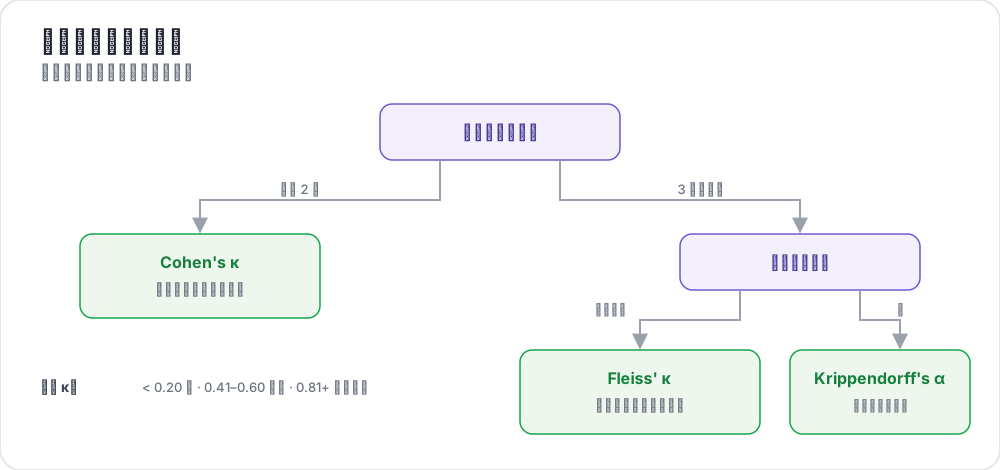 Which agreement metric to use
為什麼要衡量一致性?
- 驗證指南:低一致性說明指南不明確
- 評估任務難度:某些任務本身就具有主觀性
- 評價標註者:識別需要更多培訓的人
- 報告可靠性:學術發表的必要要求
- 聚合標籤:決定如何合併標註結果
一致性指標
Cohen's Kappa(2個標註者)
用於比較兩個標註者的分類資料:
text
κ = (Po - Pe) / (1 - Pe)
其中:
- Po = 觀察到的一致率
- Pe = 偶然預期的一致率
解讀標準:
| Kappa 值 | 解讀 |
|---|---|
| < 0 | 低於偶然水平 |
| 0.01-0.20 | 輕微一致 |
| 0.21-0.40 | 一般一致 |
| 0.41-0.60 | 中等一致 |
| 0.61-0.80 | 較高一致 |
| 0.81-1.00 | 幾乎完全一致 |
Fleiss' Kappa(3個及以上標註者)
用於多個標註者的分類資料:
yaml
quality_control:
  agreement:
    metrics:
      - fleiss_kappa
解讀標準與 Cohen's Kappa 相同。
Krippendorff's Alpha
最靈活的指標——支援:
- 任意數量的標註者
- 缺失資料
- 各種資料類型(名義、序數、區間、比率)
yaml
quality_control:
  agreement:
    metrics:
      - krippendorff_alpha
    alpha_level: nominal  # or ordinal, interval, ratio
解讀標準:
- α ≥ 0.80:可靠
- 0.67 ≤ α < 0.80:勉強可接受
- α < 0.67:不可靠
在 Potato 中配置一致性
基本設定
yaml
quality_control:
  agreement:
    enabled: true
    calculate_on_overlap: true

    metrics:
      - cohens_kappa
      - fleiss_kappa
      - krippendorff_alpha

    # Per annotation scheme
    per_scheme: true

    # Reporting
    report_interval: 100  # Every 100 annotations
    export_file: agreement_report.json
重疊配置
yaml
quality_control:
  redundancy:
    # How many annotators per item
    annotations_per_item: 3

    # Minimum overlap for calculations
    min_overlap_for_agreement: 2

    # Sampling for agreement
    agreement_sample_size: 100  # Calculate on 100 items
    agreement_sample_method: random  # or stratified, all
計算一致性
在儀表板中
Potato 在管理儀表板中顯示一致性指標:
yaml
quality_control:
  dashboard:
    show_agreement: true
    agreement_chart: true
    update_frequency: 60  # seconds
通過 API
bash
# Get current agreement metrics
curl http://localhost:8000/api/quality/agreement

# Response:
{
  "overall": {
    "fleiss_kappa": 0.72,
    "krippendorff_alpha": 0.75
  },
  "per_scheme": {
    "sentiment": {
      "fleiss_kappa": 0.78,
      "krippendorff_alpha": 0.80
    },
    "topic": {
      "fleiss_kappa": 0.65,
      "krippendorff_alpha": 0.68
    }
  },
  "sample_size": 150,
  "annotator_pairs": 10
}
通過命令列
bash
# Calculate agreement from output files
potato agreement --annotations annotation_output/ --output agreement_report.json

# With specific metric
potato agreement --annotations annotation_output/ --metric krippendorff --level ordinal
不同標註類型的一致性
分類型(單選、多選)
yaml
quality_control:
  agreement:
    schemes:
      sentiment:
        type: nominal
        metrics: [cohens_kappa, fleiss_kappa]

      urgency:
        type: ordinal  # Low < Medium < High
        metrics: [krippendorff_alpha]
李克特量表
yaml
quality_control:
  agreement:
    schemes:
      quality_rating:
        type: ordinal
        metrics: [krippendorff_alpha, weighted_kappa]

        # Weighted kappa for ordinal
        weighting: linear  # or quadratic
Span 標註
對於 NER,span 需要特殊處理:
yaml
quality_control:
  agreement:
    schemes:
      entities:
        type: span
        span_matching: overlap  # or exact, token

        # What to compare
        compare: label_and_span  # or label_only, span_only

        # Overlap threshold for "match"
        overlap_threshold: 0.5

        metrics:
          - span_f1
          - span_precision
          - span_recall
排名
yaml
quality_control:
  agreement:
    schemes:
      preference_rank:
        type: ranking
        metrics:
          - kendall_tau
          - spearman_rho
成對 vs 總體一致性
成對(每對)
yaml
quality_control:
  agreement:
    pairwise: true
    output_matrix: true  # Agreement matrix

# Output:
# annotator1 × annotator2: κ = 0.75
# annotator1 × annotator3: κ = 0.68
# annotator2 × annotator3: κ = 0.82
總體(所有標註者)
yaml
quality_control:
  agreement:
    overall: true
    metrics:
      - fleiss_kappa  # Designed for 3+ annotators
      - krippendorff_alpha
處理低一致性
識別問題區域
yaml
quality_control:
  agreement:
    diagnostics:
      enabled: true

      # Items with most disagreement
      show_disagreed_items: true
      disagreement_threshold: 0.5

      # Labels with most confusion
      confusion_matrix: true

      # Annotators with low agreement
      per_annotator_agreement: true
低一致性時的操作
yaml
quality_control:
  agreement:
    alerts:
      - threshold: 0.6
        action: notify
        message: "Agreement below 0.6 - review guidelines"

      - threshold: 0.4
        action: pause
        message: "Agreement critically low - pausing task"

    # Automatic guideline reminders
    show_guidelines_on_low_agreement: true
    guideline_threshold: 0.5
完整配置
yaml
annotation_task_name: "Agreement-Tracked Annotation"

quality_control:
  # Redundancy setup
  redundancy:
    annotations_per_item: 3
    assignment_method: random

  # Agreement calculation
  agreement:
    enabled: true

    # Metrics
    metrics:
      - fleiss_kappa
      - krippendorff_alpha

    # Per-scheme configuration
    schemes:
      sentiment:
        type: nominal
        metrics: [fleiss_kappa, cohens_kappa]

      intensity:
        type: ordinal
        metrics: [krippendorff_alpha]
        alpha_level: ordinal

      entities:
        type: span
        span_matching: overlap
        overlap_threshold: 0.5
        metrics: [span_f1]

    # Calculation settings
    calculate_on_overlap: true
    min_overlap: 2
    sample_size: all  # or number

    # Pairwise analysis
    pairwise: true
    pairwise_output: agreement_matrix.csv

    # Diagnostics
    diagnostics:
      confusion_matrix: true
      disagreed_items: true
      per_annotator: true

    # Alerts
    alerts:
      - metric: fleiss_kappa
        threshold: 0.6
        action: notify

    # Reporting
    report_file: agreement_report.json
    report_interval: 50

  # Dashboard
  dashboard:
    show_agreement: true
    charts:
      - agreement_over_time
      - per_scheme_agreement
      - annotator_comparison
輸出報告
json
{
  "timestamp": "2024-10-25T15:30:00Z",
  "sample_size": 500,
  "annotators": ["ann1", "ann2", "ann3"],

  "overall_agreement": {
    "fleiss_kappa": 0.72,
    "krippendorff_alpha": 0.75
  },

  "per_scheme": {
    "sentiment": {
      "fleiss_kappa": 0.78,
      "confusion_matrix": {
        "Positive": {"Positive": 180, "Negative": 5, "Neutral": 15},
        "Negative": {"Positive": 8, "Negative": 165, "Neutral": 12},
        "Neutral": {"Positive": 12, "Negative": 10, "Neutral": 93}
      }
    }
  },

  "pairwise": {
    "ann1_ann2": 0.75,
    "ann1_ann3": 0.70,
    "ann2_ann3": 0.72
  },

  "per_annotator": {
    "ann1": {"avg_agreement": 0.73, "items_annotated": 500},
    "ann2": {"avg_agreement": 0.74, "items_annotated": 500},
    "ann3": {"avg_agreement": 0.71, "items_annotated": 500}
  },

  "most_disagreed_items": [
    {"id": "item_234", "disagreement_rate": 1.0},
    {"id": "item_567", "disagreement_rate": 0.67}
  ]
}
最佳實踐
- 儘早計算:不要等到最後才計算
- 使用合適的指標:區分名義型、序數型和 span
- 調查低一致性:通常能發現指南問題
- 在論文中報告:學術工作的必需項
- 設定閾值:提前定義可接受的水平
下一步
完整的一致性文件請參閱 使用者管理。