Оценка ИИ-агентов: человеческая разметка трасс агентов
Как выстроить человеческую оценку вывода ИИ-агента в Potato: от импорта трасс через устройство схем на уровне трассы и шагов до разбора выгруженных результатов.
Автоматические метрики говорят, как часто агент справляется, но не почему он провалился. Человеческая оценка показывает шаг, на котором рассуждение свернуло не туда. В этом руководстве мы собираем полный конвейер человеческой оценки ИИ-агентов на возможностях разметки агентов в Potato.
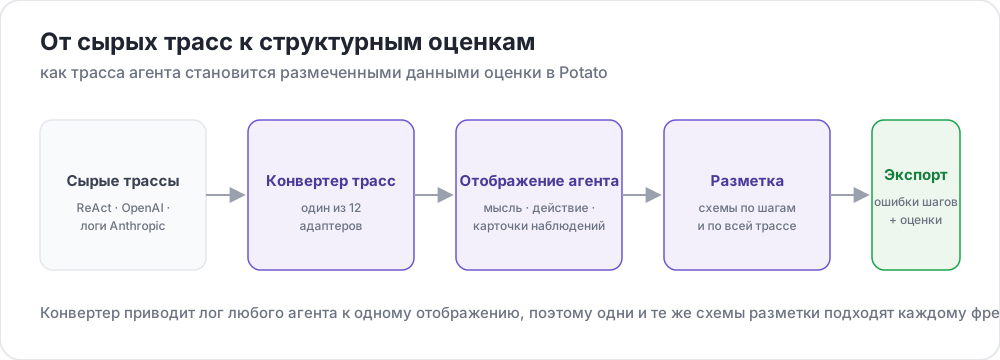 From raw traces to structured judgments
Мы будем оценивать агента в стиле ReAct, который отвечает на вопросы поиском в вебе. К концу у вас будет:
- Импортированы трассы агента в Potato
- Настроено отображение трассы агента
- Заданы схемы разметки и по трассе целиком, и по шагам
- Проведена задача разметки
- Выгружены структурные результаты оценки
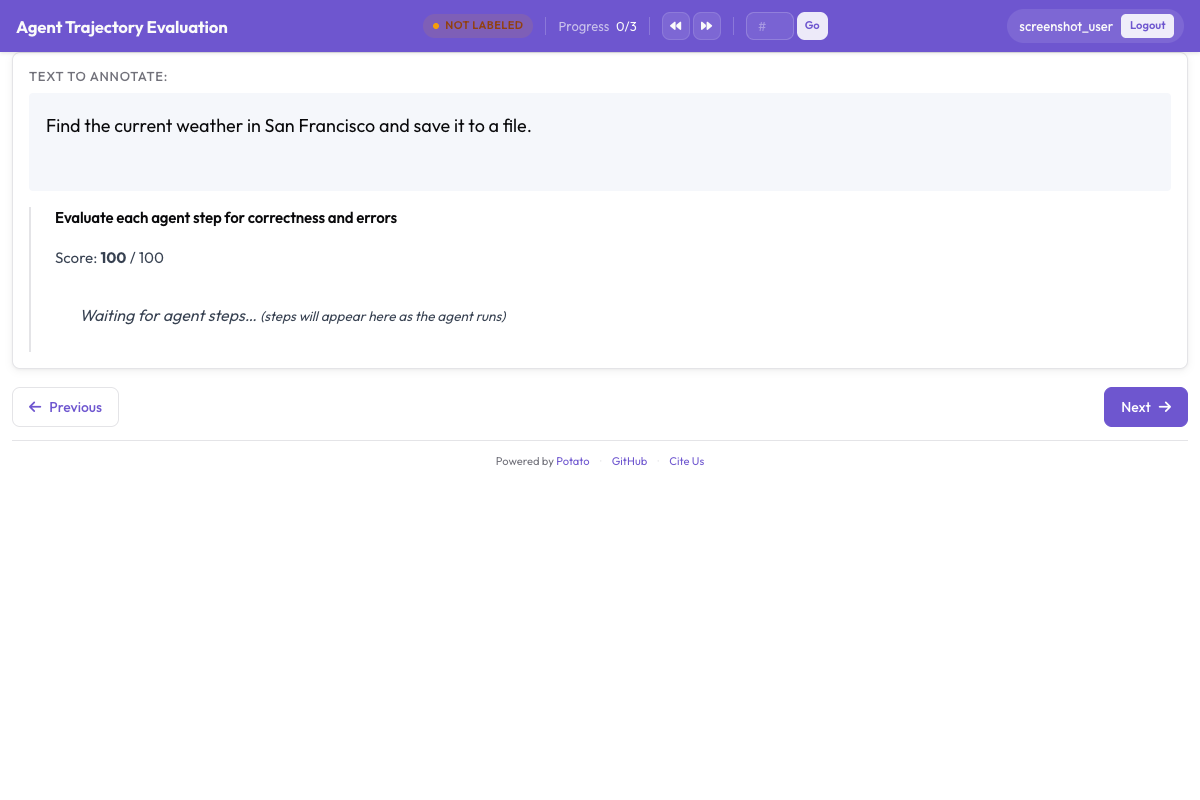
Отображение трасс агента в Potato рисует каждый шаг карточкой с цветовой маркировкой для мыслей, действий и наблюдений:
Что понадобится
Установите Potato 2.3.0 или новее:
pip install --upgrade potato-annotationПонадобятся и сами трассы агента для оценки. В руководстве используются трассы ReAct, но тот же подход работает для любого из 15 поддерживаемых форматов.
Шаг 1: подготовьте трассы агента
Трасса ReAct — это последовательность шагов «мысль», «действие» и «наблюдение». Вот минимальный пример. Создайте файл data/traces.jsonl:
{
  "trace_id": "trace_001",
  "task": "What is the capital of Australia and what is its population?",
  "trace": [
    {"type": "thought", "content": "I need to find the capital of Australia and its population. Let me search for this."},
    {"type": "action", "content": "search", "action_input": "capital of Australia"},
    {"type": "observation", "content": "Canberra is the capital city of Australia. It was chosen as the capital in 1908 as a compromise between Sydney and Melbourne."},
    {"type": "thought", "content": "The capital is Canberra. Now I need to find its population."},
    {"type": "action", "content": "search", "action_input": "Canberra population 2025"},
    {"type": "observation", "content": "Canberra has a population of approximately 467,000 as of 2025, making it the eighth-largest city in Australia."},
    {"type": "thought", "content": "I now have both pieces of information. The capital of Australia is Canberra with a population of approximately 467,000."},
    {"type": "action", "content": "finish", "action_input": "The capital of Australia is Canberra, with a population of approximately 467,000 as of 2025."}
  ],
  "ground_truth": "Canberra, approximately 467,000"
}
Каждая строка файла JSONL — одна полная трасса агента. Поле trace содержит пошаговый лог. Поле task — то, что агента просили сделать.
Замечания о форматах трасс
У трасс с вызовом функций OpenAI формат выглядит иначе:
{
  "trace_id": "oai_001",
  "task": "Find cheap flights from NYC to London",
  "messages": [
    {"role": "user", "content": "Find cheap flights from NYC to London"},
    {"role": "assistant", "content": null, "tool_calls": [{"function": {"name": "search_flights", "arguments": "{\"from\": \"NYC\", \"to\": \"LHR\"}"}}]},
    {"role": "tool", "name": "search_flights", "content": "{\"flights\": [{\"airline\": \"BA\", \"price\": 450}, {\"airline\": \"AA\", \"price\": 520}]}"},
    {"role": "assistant", "content": "I found flights from NYC to London. The cheapest is British Airways at $450."}
  ]
}
Эти различия берёт на себя конвертер Potato. Вам нужно лишь указать правильное имя конвертера.
Шаг 2: создайте конфигурацию проекта
Создайте config.yaml:
annotation_task_name: "ReAct Agent Evaluation"
task_dir: "."

data_files:
  - "data/traces.jsonl"

item_properties:
  id_key: trace_id
  text_key: task

# --- Agentic annotation settings ---
agentic:
  enabled: true
  trace_converter: react
  display_type: agent_trace

  agent_trace_display:
    colors:
      thought: "#6E56CF"
      action: "#3b82f6"
      observation: "#22c55e"
      error: "#ef4444"
    collapse_observations: true
    collapse_threshold: 400
    show_step_numbers: true
    show_timestamps: false
    render_json: true
    syntax_highlight: true
Это говорит Potato:
- Загрузить трассы из
data/traces.jsonl - Разобрать поле
traceконвертером ReAct - Показывать трассы через отображение трассы агента с цветными карточками шагов
Шаг 3: продумайте схемы разметки
Оценке агента обычно нужны и суждения на уровне трассы (справился ли агент?), и на уровне шага (верен ли каждый шаг?). Добавим и то и другое.
Добавьте в config.yaml следующее:
annotation_schemes:
  # --- Trace-level schemas ---

  # 1. Task success (the most important metric)
  - annotation_type: radio
    name: task_success
    description: "Did the agent successfully complete the task?"
    labels:
      - "Success"
      - "Partial Success"
      - "Failure"
    label_requirement:
      required: true
    sequential_key_binding: true

  # 2. Answer correctness (if the task has a ground truth)
  - annotation_type: radio
    name: answer_correctness
    description: "Is the agent's final answer factually correct?"
    labels:
      - "Correct"
      - "Partially Correct"
      - "Incorrect"
      - "Cannot Determine"
    label_requirement:
      required: true

  # 3. Efficiency rating
  - annotation_type: likert
    name: efficiency
    description: "Did the agent use an efficient path to the answer?"
    labels:
      1: "Very Inefficient (many unnecessary steps)"
      3: "Average"
      5: "Optimal (no wasted steps)"

  # 4. Free-text notes
  - annotation_type: text
    name: evaluator_notes
    description: "Any additional observations"
    label_requirement:
      required: false

  # --- Step-level schemas ---

  # 5. Per-step correctness
  - annotation_type: trajectory_eval
    name: step_correctness
    steps_key: agentic_steps
    description: "Was this step correct and useful?"
    correctness_options:
      - "Correct"
      - "Partially Correct"
      - "Incorrect"
      - "Unnecessary"

  # 6. Per-step error type (only shown when step is not correct)
  - annotation_type: trajectory_eval
    name: error_type
    steps_key: agentic_steps
    description: "What type of error occurred?"
    correctness_options:
      - "Wrong tool/action"
      - "Wrong arguments"
      - "Hallucinated information"
      - "Reasoning error"
      - "Redundant step"
      - "Premature termination"
      - "Other"
Это покрывает оба конца разбора. Метка успеха или провала и оценка правильности ответа дают верхнеуровневые числа. Оценка эффективности позволяет сравнивать стратегии. А пошаговые оценки с таксономией ошибок, которая появляется только при пометке шага неверным, показывают, где всё сломалось.
Шаг 4: настройте вывод и запустите сервер
Добавьте в config.yaml настройки вывода:
output_annotation_dir: "output/"
export_annotation_format: "jsonl"

# Optional: also export to Parquet for analysis
parquet_export:
  enabled: true
  output_dir: "output/parquet/"
  compression: zstd
Полный config.yaml для справки:
annotation_task_name: "ReAct Agent Evaluation"
task_dir: "."

data_files:
  - "data/traces.jsonl"

item_properties:
  id_key: trace_id
  text_key: task

agentic:
  enabled: true
  trace_converter: react
  display_type: agent_trace
  agent_trace_display:
    colors:
      thought: "#6E56CF"
      action: "#3b82f6"
      observation: "#22c55e"
      error: "#ef4444"
    collapse_observations: true
    collapse_threshold: 400
    show_step_numbers: true
    render_json: true
    syntax_highlight: true

annotation_schemes:
  - annotation_type: radio
    name: task_success
    description: "Did the agent successfully complete the task?"
    labels: ["Success", "Partial Success", "Failure"]
    label_requirement:
      required: true
    sequential_key_binding: true

  - annotation_type: radio
    name: answer_correctness
    description: "Is the agent's final answer factually correct?"
    labels: ["Correct", "Partially Correct", "Incorrect", "Cannot Determine"]
    label_requirement:
      required: true

  - annotation_type: likert
    name: efficiency
    description: "Did the agent use an efficient path?"
    labels:
      1: "Very Inefficient"
      3: "Average"
      5: "Optimal"

  - annotation_type: text
    name: evaluator_notes
    description: "Any additional observations"
    label_requirement:
      required: false

  - annotation_type: trajectory_eval
    name: step_correctness
    steps_key: agentic_steps
    description: "Was this step correct?"
    correctness_options: ["Correct", "Partially Correct", "Incorrect", "Unnecessary"]

  - annotation_type: trajectory_eval
    name: error_type
    steps_key: agentic_steps
    description: "Error type"
    correctness_options:
      - "Wrong tool/action"
      - "Wrong arguments"
      - "Hallucinated information"
      - "Reasoning error"
      - "Redundant step"
      - "Premature termination"
      - "Other"
output_annotation_dir: "output/"
export_annotation_format: "jsonl"

parquet_export:
  enabled: true
  output_dir: "output/parquet/"
  compression: zstd
Запустите сервер:
potato start config.yaml -p 8000Откройте в браузере http://localhost:8000.
Шаг 5: как идёт разметка
Открыв трассу, разметчик видит:
- Описание задачи сверху (исходный запрос пользователя)
- Карточки шагов со всей трассой агента, с цветовой маркировкой по типу:
- Фиолетовые карточки — мысли и рассуждения
- Синие — действия и вызовы инструментов
- Зелёные — наблюдения и результаты
- Красные — ошибки
- Элементы оценки шага рядом с каждой карточкой
- Схемы уровня трассы под отображением трассы
Типичный порядок работы:
- Прочитайте описание задачи, чтобы понять, что агент должен был сделать
- Пройдите по шагам трассы, оценивая каждый
- Для шагов, помеченных «частично верно» или «неверно», выберите тип (или типы) ошибки
- Оцените трассу целиком (успех, правильность, эффективность)
- При необходимости добавьте заметки
- Отправьте и переходите к следующей трассе
Советы разметчикам
Разворачивайте свёрнутые наблюдения, а не доверяйте им на глаз: именно там ловится момент, когда агент неверно прочитал найденное. Сверьте итоговый ответ с эталоном, если он есть, прежде чем оценивать успешность задачи. Различайте «лишний» и «неверный» шаг: лишний тратит усилия, но ошибки не вносит. А на длинных трассах боковой таймлайн шагов позволяет сразу перейти к нужному шагу.
Шаг 6: разбор результатов
После разметки результаты разбираются программно.
Базовый разбор через pandas
import pandas as pd
import json

# Load annotations
annotations = []
with open("output/annotations.jsonl") as f:
    for line in f:
        annotations.append(json.loads(line))

df = pd.DataFrame(annotations)

# Task success rate
success_counts = df.groupby("annotations").apply(
    lambda x: x.iloc[0]["annotations"]["task_success"]
).value_counts()
print("Task Success Distribution:")
print(success_counts)

# Average efficiency rating
efficiency_scores = [
    a["annotations"]["efficiency"]
    for a in annotations
    if "efficiency" in a["annotations"]
]
print(f"\nAverage Efficiency: {sum(efficiency_scores) / len(efficiency_scores):.2f}")
Разбор ошибок по шагам
# Collect all step-level errors
error_counts = {}
for ann in annotations:
    step_errors = ann["annotations"].get("error_type", {})
    for step_idx, errors in step_errors.items():
        for error in errors:
            error_counts[error] = error_counts.get(error, 0) + 1

print("Error Type Distribution:")
for error, count in sorted(error_counts.items(), key=lambda x: -x[1]):
    print(f"  {error}: {count}")
Разбор через DuckDB (по Parquet)
import duckdb

# Overall success rate
result = duckdb.sql("""
    SELECT value, COUNT(*) as count
    FROM 'output/parquet/annotations.parquet'
    WHERE schema_name = 'task_success'
    GROUP BY value
    ORDER BY count DESC
""")
print(result)
Шаг 7: масштабирование
Для более крупных проектов оценки (сотни и тысячи трасс) присмотритесь к таким настройкам:
Несколько разметчиков
Назначайте на трассу нескольких разметчиков ради согласованности:
annotation_task_config:
  total_annotations_per_instance: 3
  assignment_strategy: random
Готовые схемы
Для быстрой настройки возьмите готовые схемы оценки агентов из Potato:
annotation_schemes:
  - preset: agent_task_success
  - preset: agent_step_correctness
  - preset: agent_error_taxonomy
  - preset: agent_efficiency
Контроль качества
Включите эталонные объекты для наблюдения за качеством:
phases:
  training:
    enabled: true
    data_file: "data/training_traces.jsonl"
    passing_criteria:
      min_correct: 4
      total_questions: 5
Как приспособить под другие типы агентов
Вызов функций OpenAI
agentic:
  enabled: true
  trace_converter: openai
  display_type: agent_trace
Работа с инструментами Anthropic
agentic:
  enabled: true
  trace_converter: anthropic
  display_type: agent_trace
Мультиагентные системы (CrewAI/AutoGen)
agentic:
  enabled: true
  trace_converter: multi_agent
  display_type: agent_trace
  multi_agent:
    agent_converters:
      researcher: react
      writer: anthropic
      reviewer: openai
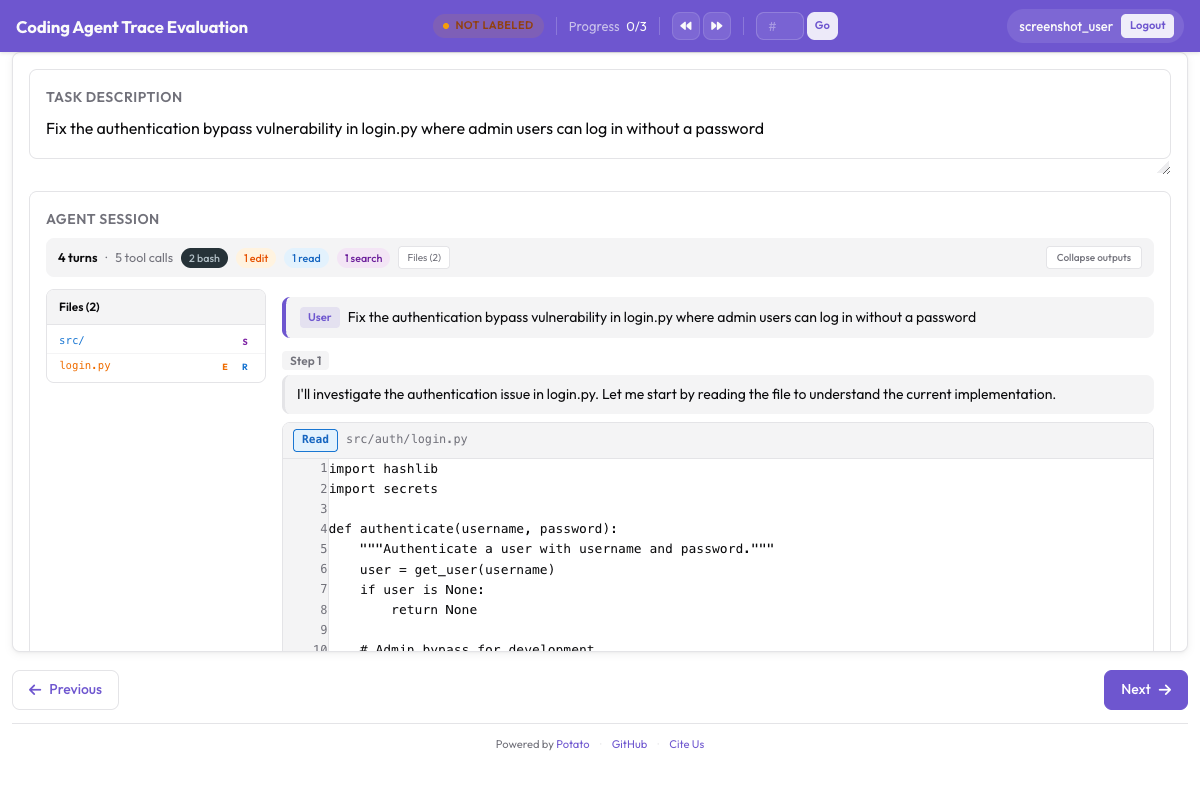
Для кодовых агентов Potato отрисовывает диффы кода и вывод терминала с нормальным форматированием:
Агенты, работающие в вебе
Для веб-агентов переключитесь на отображение веб-агента:
agentic:
  enabled: true
  trace_converter: webarena
  display_type: web_agent
  web_agent_display:
    screenshot_max_width: 900
    overlay:
      enabled: true
    filmstrip:
      enabled: true
Отдельное руководство — Разметка агентов, работающих в вебе.
Итог
Система разметки агентов в Potato идёт с 15 конвертерами трасс, так что трассы из большинства фреймворков заводятся без переделки, с тремя типами отображения под работу с инструментами, веб-сёрфинг и диалоговых агентов, с оценками по репликам для суждений на уровне шага, с 9 готовыми схемами под частые измерения оценки и с экспортом в Parquet — для момента, когда вы садитесь всё это разбирать.
«Дал ли агент правильный ответ?» — простой вопрос. Верно ли он рассуждал на каждом шаге — вопрос потруднее, и отвечает на него именно пошаговая разметка. Агрегированные метрики эти ошибки усредняют и прячут.
Детали реализации — в руководстве по оценке агентов и в документации по трассам агентов.
Что почитать дальше
- Документация по разметке агентов
- Разметка агентов, работающих в вебе
- Solo Mode — совмещение разметки агентов с совместной оценкой человека и LLM
- Шкалирование «лучший—худший» — сравнительное ранжирование выводов агента
- Экспорт в Parquet — эффективная выгрузка для разбора